Re-create office vibes, remotely
Could I find a problem the billion-dollar HR industry had somehow missed in less than two weeks? (Spoiler: yes!) This was off-script, off-the-cuff — UX meets Product Management, jazz-improv in one take. Enjoy!
The brief centred on Officevibe: a manager-first employee-engagement platform built on weekly Pulse Surveys, anonymous feedback and smarter 1-on-1s. The ask was a two-week sprint to help remote new starters onboard more easily and feel less alone. The reasoning was the pandemic story everyone knew — offices shut, the small human moments gone: no watercooler chats, no post-work drinks, no bumping into someone by the kettle. New starters had it worst, joining a company they couldn’t see and learning who’s who through a screen. Build towards an MVP, it said, for a launch aimed at January 2022 New-Year’s-resolution joiners.
That date was the first thing I noticed. I was reading the brief well after it had passed — lockdowns over, offices open, hybrid already normal. A recycled General Assembly UX/UI Design Immersive brief from the previous year — those students likely got a great deal from it, was my immediate thought. Followed by: well, it was bestowed upon me. Challenge accepted! Let’s see what happens when I put my spin on it! A brief is a hypothesis, not a fact, so before I booked a single interview or sketched a single screen I did the one thing it hadn’t: I asked real remote new starters whether any of this still held. I put a short survey out from the off.
The brief was dead on arrival
Twelve remote new starters answered before I’d run a single interview. The results didn’t nudge the brief — they retired it.
I set the brief’s own claims against the survey. Point for point, the premise it was built on didn’t hold:
Remote workers don’t get the same experience as in-person.
rated it Good or Very Good; 42% Average — and none poor.
Remote onboarding makes it hard for new starters to make friends.
disagreed they were facilitated to meet colleagues from the get-go.
New starters struggle to know who’s who and the ins-and-outs of the workplace.
reported a poor experience finding their feet — every company had a routine for it.
The brief’s premise — lonely, lost new starters who can’t make friends or find their feet — wasn’t wrong when it was written. It had simply gone stale while the world caught up. The pandemic problem had quietly solved itself.
So — now what?
A two-week sprint, a dead brief, and no problem to solve. Designing a cure for a problem that no longer exists is the most expensive way to ship nothing — so rather than force the brief, I went to find the problem that did exist.
If not loneliness, then what?
I had a sprint but no problem — so I had to go and find one worth solving. I decided to cast a wide net and interview members from both sides of the equation — employers and candidates, plus Officevibe themselves.
First off, an interview with a friend who I remembered had started a role fairly recently — Stipica. He handed me the gem. But I didn’t let myself chase it straight away — first I had to satisfy myself that the onboarding problem really was as solved as the survey claimed.
So I went looking for cracks in the onboarding story. I didn’t find any — I found something else.
First: was onboarding really solved?
If onboarding were only handled well at slick, well-resourced firms, the brief might still stand for everyone else. It didn’t. Across the board — bootstrapped, mid-size and large — every company treated getting onboarding right as a serious priority:
Hands-on intros and icebreakers so every new starter feels comfortable and makes a real connection fast.
Daily stand-ups, weekly 1-on-1s and a quarterly review built entirely around the employee.
Flew her to a three-day offsite for the company’s five-year anniversary in Haarlem in week one — workshops, team-building, the lot.
Small, medium, large — the same answer. Onboarding is a solved, well-funded routine now. Whatever the real gap was, it lived somewhere else. To find it, I listened to both sides properly.
The founders

We introduce ourselves, they introduce themselves, we have icebreakers — the whole idea is to make them feel comfortable and create a meaningful connection.
What every human values is being valued — and having clear outcomes, with a support network that helps them get there.
Their playbooks rhymed: lead with the mission, assign a buddy to shadow, run daily stand-ups and 1-on-1s, and get everyone together in person once or twice a year. Laid side by side they were near-identical:
Stripped to its sequence, that shared play runs mission → buddy → friendships → the twice-a-year offsite — and then stops. No step for the thing I’d soon realise mattered most.
Lead with the mission
Value, onboarding & support from day one.
Assign a buddy
Someone to shadow and ask the dumb questions.
Encourage friendships
Icebreakers, connection, comfort early.
In-person twice a year
Get everyone together where budget allows.
Peer appraisal
No step exists for how peers rate the work.
The remote workers

We spent three days in Haarlem — workshops, meeting people, team-building. I met my whole team and company within a month. I love it.
They gave me a hiring plan — a three-month plan, with what they expect after each month. The HR specialist checked in with me every month.
Both had settled fast and felt genuinely supported — confirming the survey. But plotting their two journeys on one axis showed what the quotes alone didn’t:
One thrived. The other dived.
Same timeline, same mood axis. Sadiqa’s line holds high; Stipica’s climbs through onboarding, then falls away exactly where peer feedback should be.
High point
Flew to a three-day offsite for the company’s five-year anniversary in Haarlem in week one.
How she knows
An open, flat, no-fear culture — confidence comes from conversation.
The quiet gap
Even so, feedback is only spoken aloud — nothing is tracked.
High point
Did three months of deliverables in his first month.
The dip
Layoffs in the background; no read on what stakeholders thought of him.
His own fix
“Monthly pulses where each member judges each member — anonymous.”
Stipica’s gem
My very first interview handed me the thing I was hunting for. And it carried real weight, because of where Stipica sat: his company had laid off 10% of its people in seven months. Layoffs in the background, no clear read on his own standing — the exact pressure that’s only become more familiar since. Asked what his company could do better, he didn’t hesitate. He wanted “monthly pulses where each member would judge each member working with them — all anonymous,” so he could finally see “what my stakeholders think about me.” His reason is the whole problem in a sentence:
“Sometimes you fantasise that things are a way they’re not.”
A capable person, doing well, watching jobs disappear around him — with no reliable read on how the people he worked with actually rated him. There’s a quiet spiral in that: when people fear for their jobs, motivation drops just as the pressure on their numbers climbs. A fair, regular signal of where you stand is exactly what breaks it. I crystallised the idea as an index on how you’re doing — your standing with the people you actually work with. Stipica came first, so from there I drilled into this exact issue in each interview that followed — to test whether it was a real, unaddressed problem or just one person’s wish.
So I drilled into it with the others
The one-to-ones? Just the line manager.
Asked directly whether confidence came from all stakeholders or just the manager, Alan confirmed the feedback stops at the line manager — nobody else formally weighs in.
It’s only spoken aloud… or a kudos board on Confluence.
When I moved into the solution space — live, anonymous good-vibes feedback — she engaged with it directly and admitted her company captured none of it in a system.
I’m going to shoot my arrow along that line.
I told Julian what Stipica had said — and heard myself commit to it out loud. The brief had become a mission.
Three different vantage points, one consistent shape: your line manager owns your appraisal, but on cross-team projects they aren’t hands-on — so the people who actually saw your work have no way to weigh in. Stipica had named a real need, Sadiqa confirmed no one was capturing it, and Alan showed exactly where the wiring stopped. The need was real and unmet — so the next question was the product one: does anyone already solve this, and where would it even live?
I put my product hat on
Here I should say where I come from: before UX, I’ve spent years as a product manager taking ideas to market. So faced with a real, unmet need, I didn’t reach for a sketch pad — I reached for the moves that ship real products. The first questions weren’t “what should this look like?” They were “does this already exist, and where would it actually live?”
Where would feedback live? Follow the work
Stipica’s peer pulses would only get used if they sat where the work already happened. And the work already had a home: Stipica ran his team out of Guru; Alan and Sadiqa both lived in Confluence — Sadiqa’s team even kept a kudos board there. So my opening hypothesis was simple: whatever I build should plug into the project tool people already open every day. Confluence was the obvious target.
So I got under Officevibe’s hood
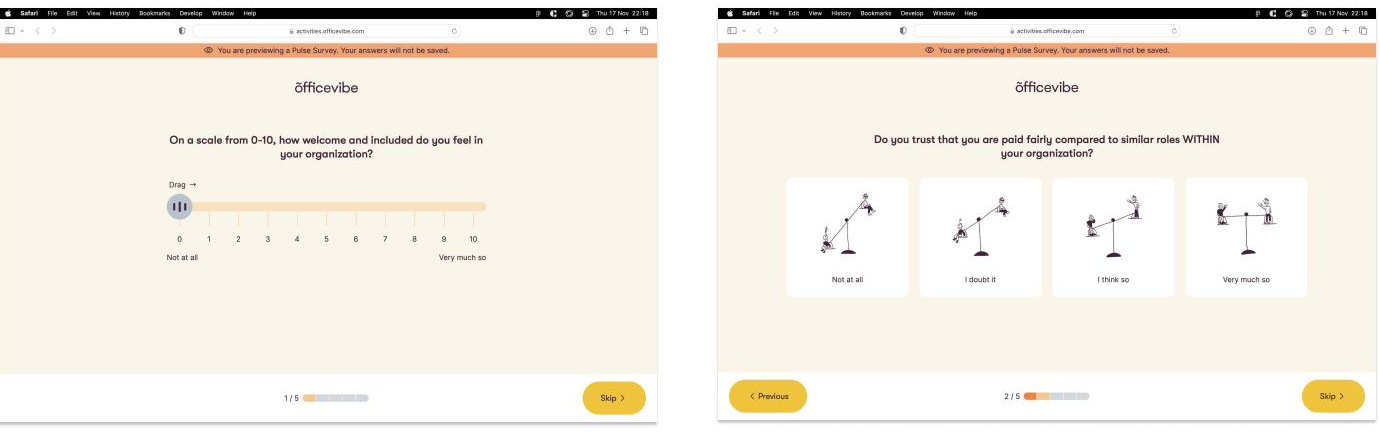
Officevibe gave me full access — real login credentials, not a brochure — so I treated it like a product I’d been asked to extend. I set up accounts, clicked through every screen, and went straight to the part most people skip: the integrations list. The verdict was immediate — no Confluence integration. But I noted one that mattered: Slack (hold that thought; it comes back).
Then I scanned the competition
Next reflex: was anyone else already doing peer-level feedback, and did any of them plug into Confluence? I worked through the survey market — Culture Amp, Lattice, 15Five, Peakon and the rest. They were strikingly alike: manager-to-employee pulses and engagement dashboards. None offered true peer appraisal, and none integrated with Confluence. One stood apart:
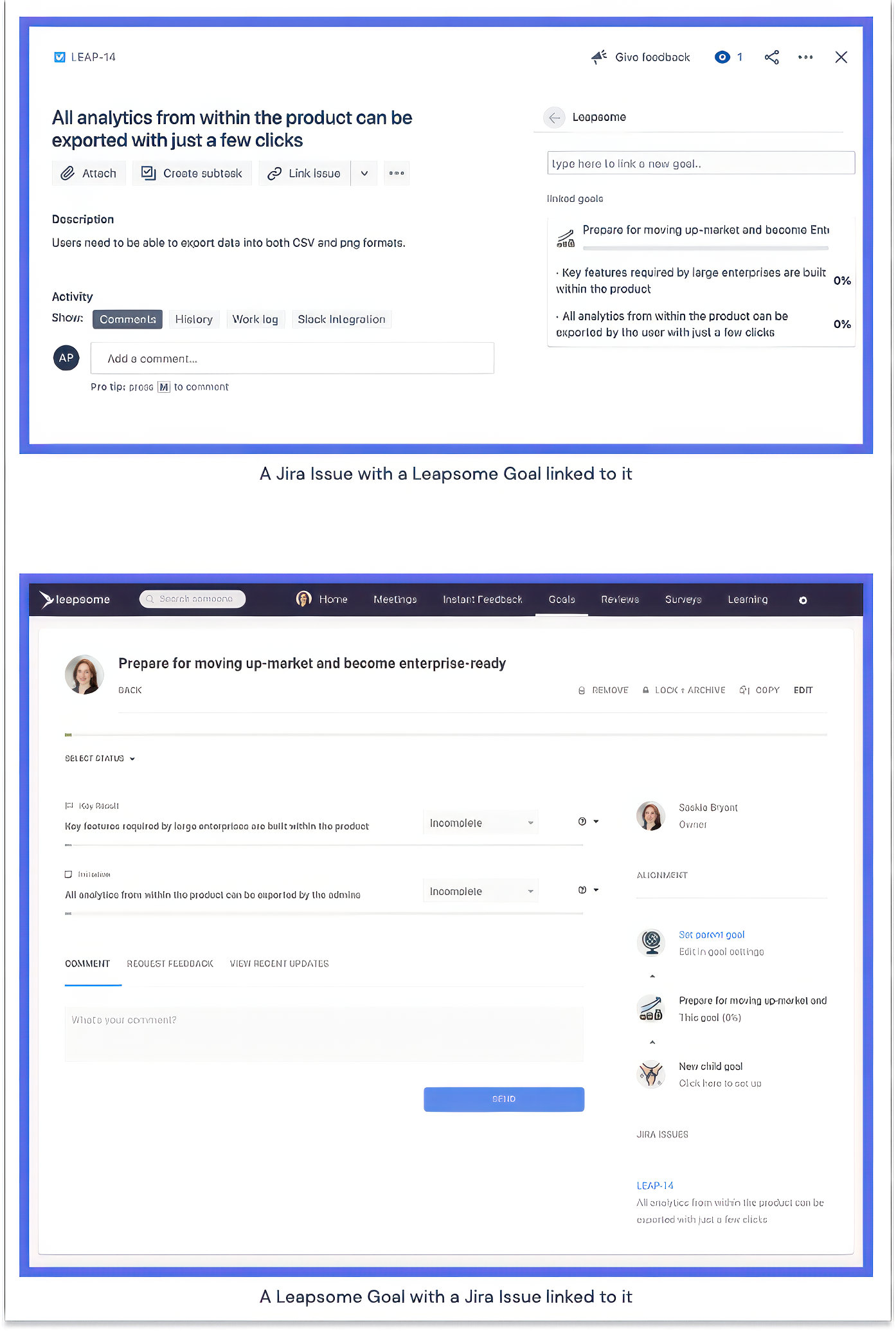
Laid out side by side, the whole market told the same story — and left the same space empty:
Nobody let your peers appraise the cross-functional work your manager never saw. The need was real and the space was genuinely open.
Then I went to the source
To be certain, I arranged a call with an Account Manager at Officevibe — and framed it as a product manager with a client running a team across six countries. I asked, indirectly, whether they did anything like peer-and-stakeholder feedback. His answer described the product’s whole philosophy:
“The main thing that’s different with Officevibe is we take a manager-first approach. The manager is the first line of command.”
Confirmed: manager-first, no peer appraisal. The call paid off twice over — the Account Manager also mentioned a sister product, Softstart, that handles onboarding. That was a useful dead end to close: chasing onboarding would’ve been wasted effort (it wasn’t even in the brief), and now I knew Officevibe already had that base covered. I could stay focused on the gap that was genuinely open.
And then — the brick wall
Everything pointed to the same plan: build peer feedback and slot it into Confluence, where the work lived. There was just one problem.
“However hard I tried, I just couldn’t integrate Officevibe into Confluence. I almost gave up.”
No native integration, no realistic way to bolt one on inside a two-week sprint. The plan I’d reasoned my way to was a non-starter. I sat with it, frustrated — and then, at 3am, the thing flipped.
Stop trying to drag Officevibe into the project tool. Bring the project tool into Officevibe — a native Projects tab, built to look like it had always belonged there.
Having login access made this more than a mock-up: I could build the new flow inside Officevibe’s real interface, in its own visual language, so it read as a first-party feature rather than a concept bolted on from outside. The integration problem dissolved — because there was nothing left to integrate.
The brief sent me looking for a solved problem. I left with an unsolved one, a way to ship it inside the product itself — and a clear run at being first to it.
Framing the dip
Stipica’s journey held the whole problem in one shape. Everything Officevibe and his employer did well carried him upward — until the very end, where the line falls off a cliff. That drop isn’t onboarding. It’s the moment a capable new starter realises no one has told them how their work actually landed.
High point
Did three months of deliverables in his first month.
The dip
Layoffs in the background; no read on what stakeholders thought of him.
His own fix
“Monthly pulses where each member judges each member — anonymous.”
That cliff is the design brief I gave myself. Stated as a How Might We:
give a remote new starter a fair, regular read on their work — from the peers they actually collaborate with, not just their line manager?
Meet Amy
Every decision from here was tested against one person — Amy Tan. She’s a London take on Stipica: an experienced Product Manager, but a brand-new starter with everything riding on it.

Amy Tan
Amy spent six months out of work — applying everywhere, slowly losing hope, taking odd jobs to make ends meet. The break didn’t come from another online form that got ghosted: she met the company in person at Silicon Milkroundabout, the East London tech job fair, and finally got her foot in the door. She’s good at her job — but after half a year of rejection, the stakes of this fresh start feel enormous.
Needs
An honest, regular read on whether her work is landing — from the peers she actually collaborates with.
Fears
Layoffs are still happening elsewhere in the business. She’s acutely aware her footing isn’t secure.
The catch
Her project sits outside her department, so her best work is invisible to the line manager who decides her future.
Wins when
Feedback is specific, kind, and arrives while she can still act on it.
“I finally got my foot in the door. Now I just need to know I’m doing enough to keep it.”
The problem, stated plainly
Here’s the problem as I framed it. A manager’s 1-on-1s and quarterly targets hang on KPIs and OKRs — but those outcomes are usually the result of a cross-department team effort. So a staff member, and especially a new starter, can have their contribution overlooked even when they’re a high performer, if something outside their influence falls over. The people who’d actually know — their peers on the task — have no channel to say so.


A capable new starter can look like they’re failing when the truth is they were rowing hard in a boat with a hole in it.
The vision
Then I let myself zoom out — because a good problem statement deserves a vision worth aiming at. Fix the feedback gap, and the same people transform: from overlooked to empowered.
A future where personal development through stakeholder feedback is instant — leading to more meaningful 1-on-1s, a more empowered workforce, higher retention, better career progression… and a better society. ♥

Lofty, deliberately. But every decision that followed pointed back to it.
And because the whole thing is peer-to-peer, it doesn’t care about the setup: it works regardless of office, hybrid or fully-remote, and across any culture. Feedback between the people who did the work travels anywhere they do.
Napkin to high-def Proto
The sprint was tight — so I sketched the concept on paper and went straight to high fidelity. The thinking had to be right; the artefacts just had to be quick.
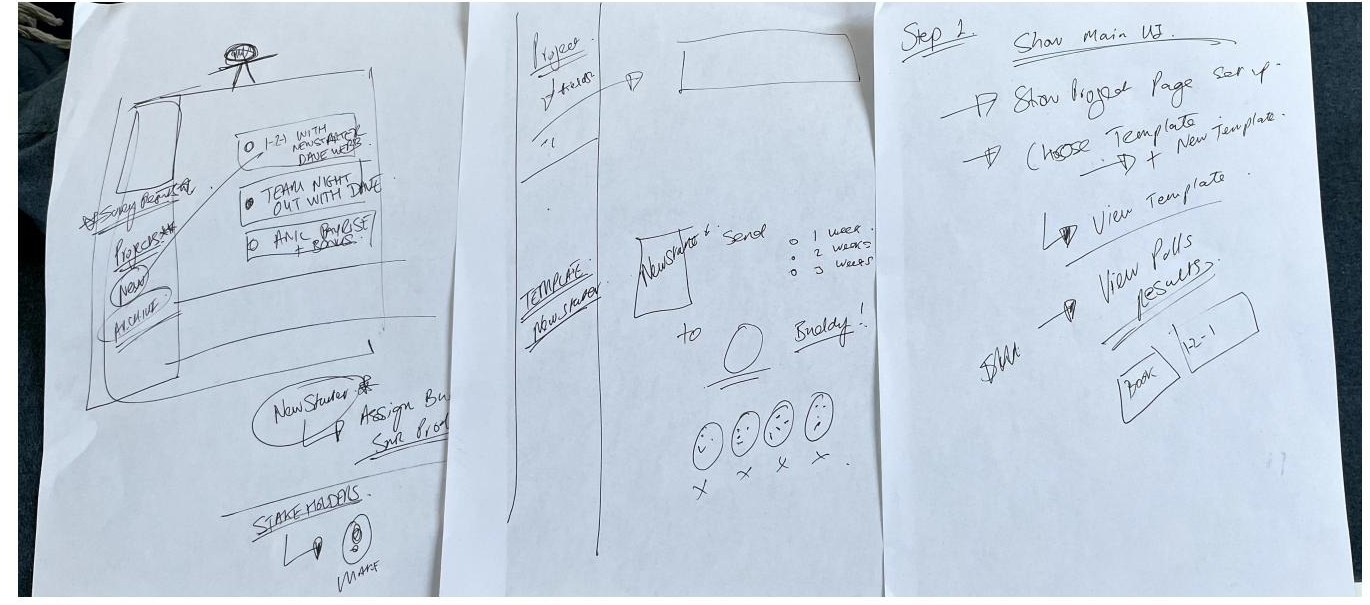
The concept: bring Projects into Officevibe. A project carries its team, its stakeholders and its objective — and from it you send a lightweight survey to the peers Amy actually worked with, with a window for replies. Feedback stops being a quarterly verdict from one manager and becomes a steady, fair signal from the room.
One task, four fixes
With the concept built natively inside Officevibe, I put it in front of real participants. One task, watched closely — and every screen here is a genuine before/after from those sessions, not a tidy after-the-fact mock-up. This is the design earning its keep.
- Create a new project with a Basic Project template, then add Amy Tan to it.
- Send a New Starter Survey to her stakeholders, set to return results in two weeks.
- Finally — tell me Amy’s average score for “Learns Fast.”
Watching people run that task surfaced four clear problems. Each became a change driven by what they said — not what I assumed.
Nobody could find their results
Participants couldn’t locate the Projects tab to check Amy’s scores afterwards. On their recommendation, I promoted Projects to the top of the main navigation.
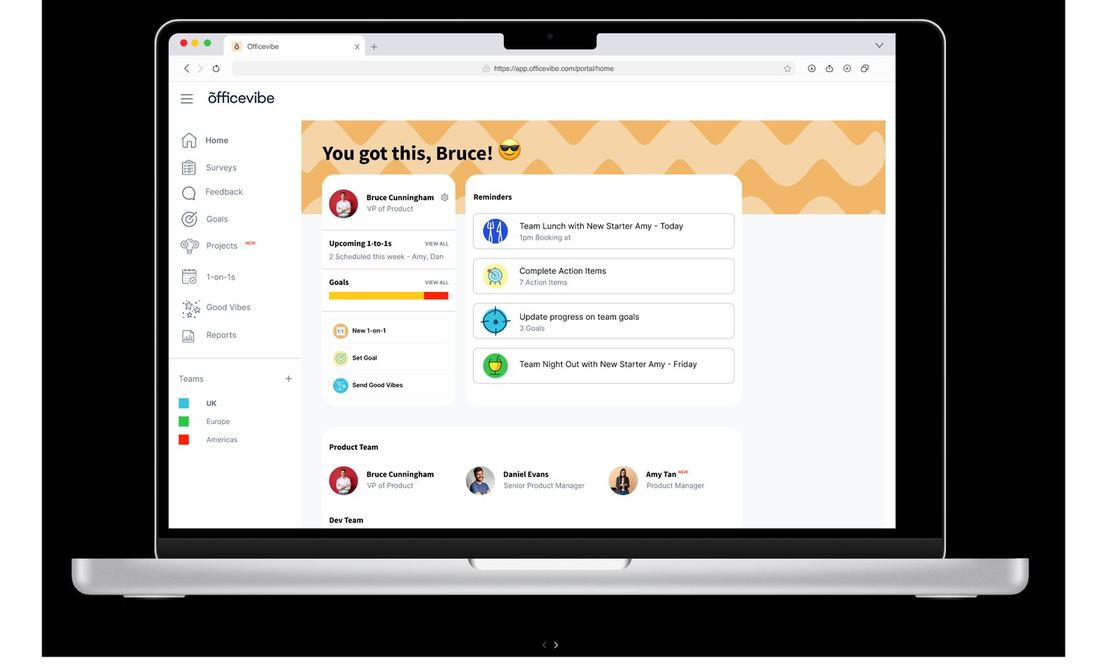
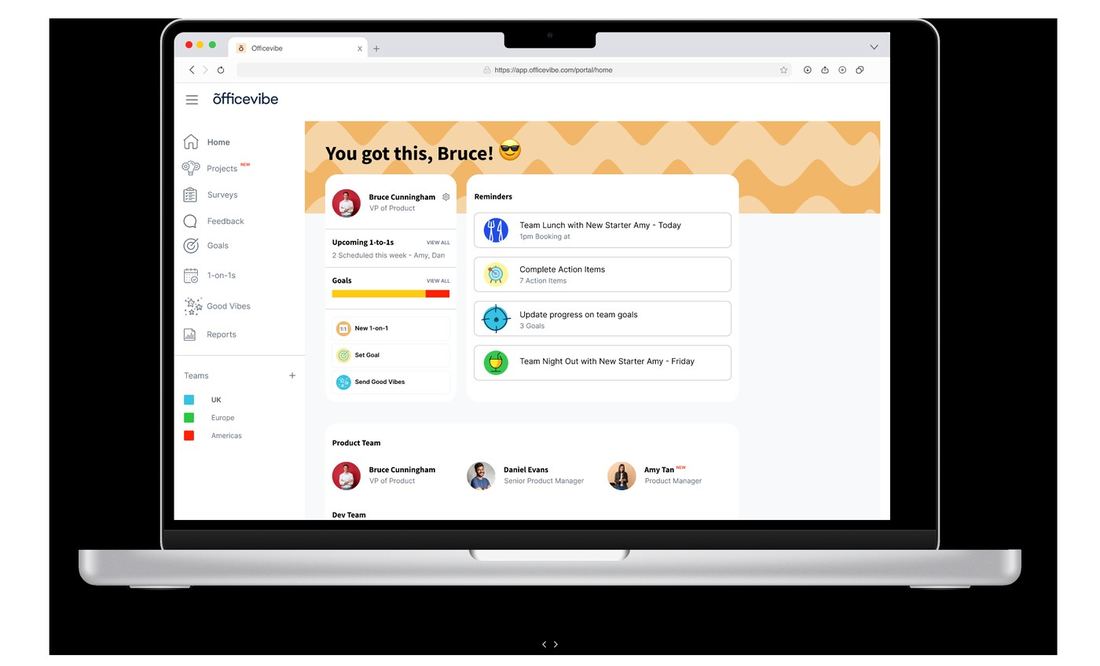
“Projects” needed to be unmissable
I made “Projects” unmissable, with two further additions: a “New” tag and a hover-state explainer.
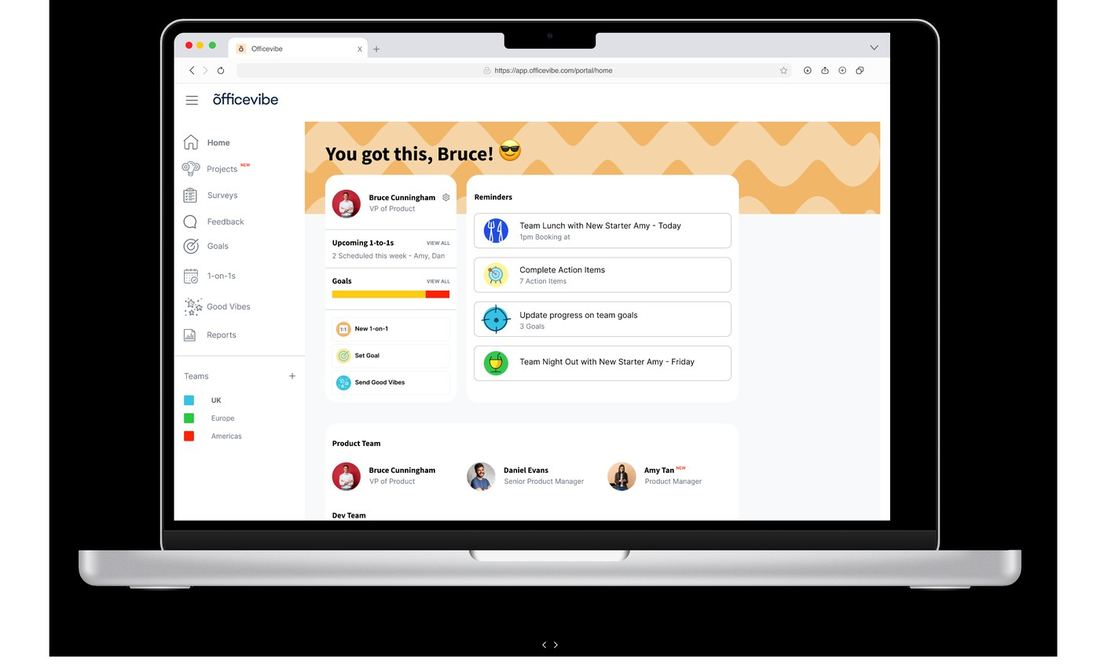
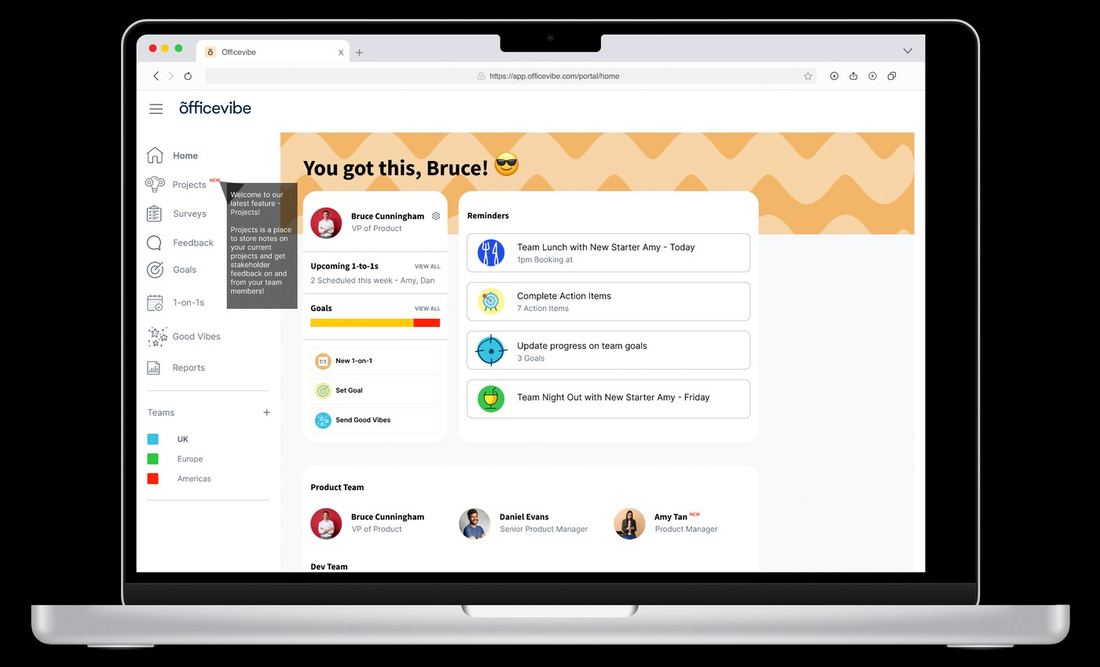
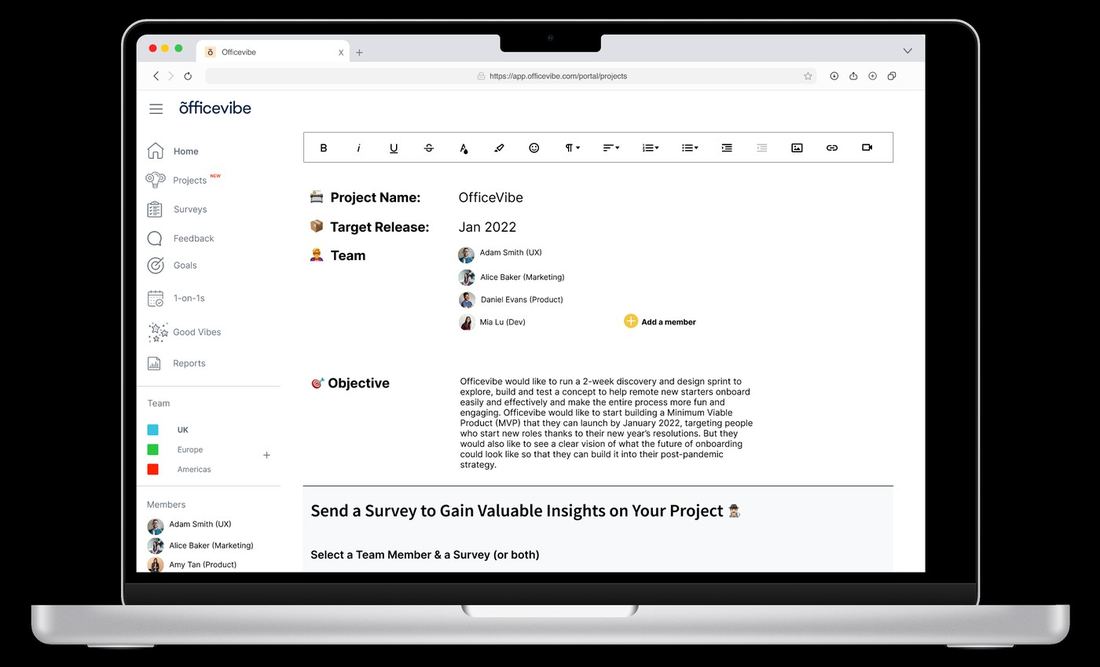
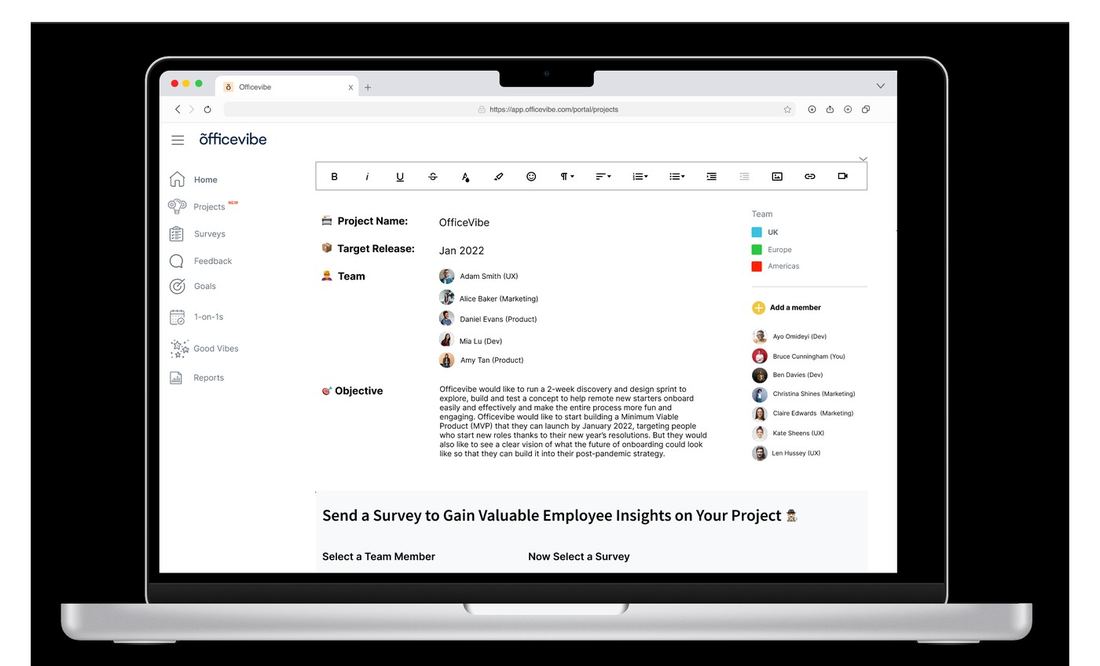
The member got lost behind the headline
People were drawn to the large “Amy Tan” text in the survey section and missed her name in Members. I moved Add Member and Members to the top, beside the Team section, so adding someone comes first.
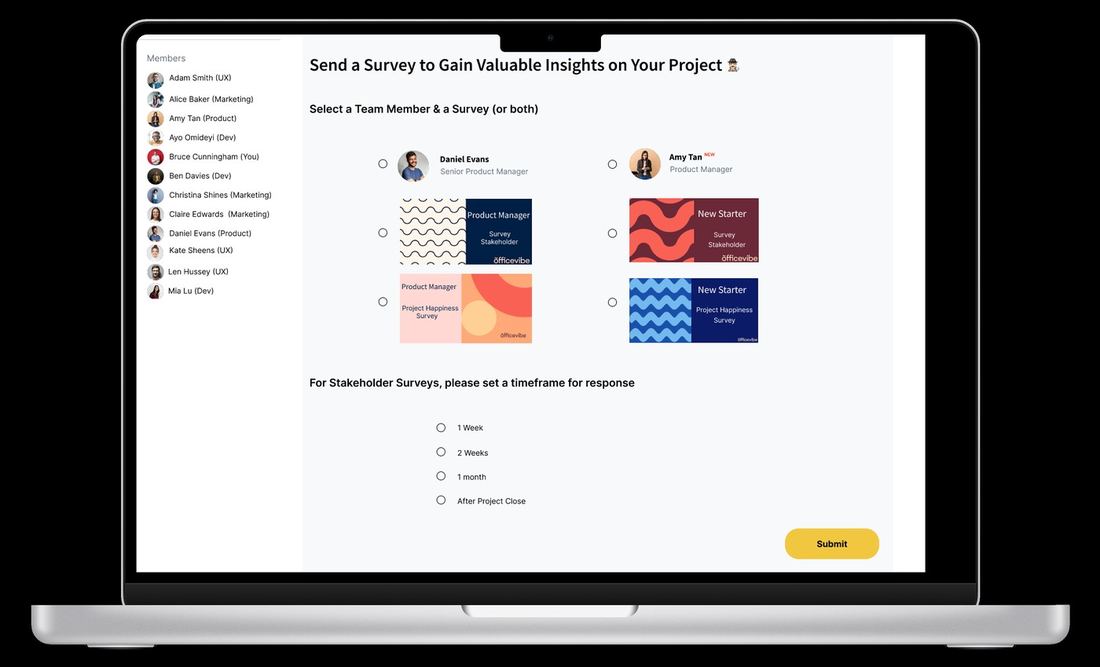
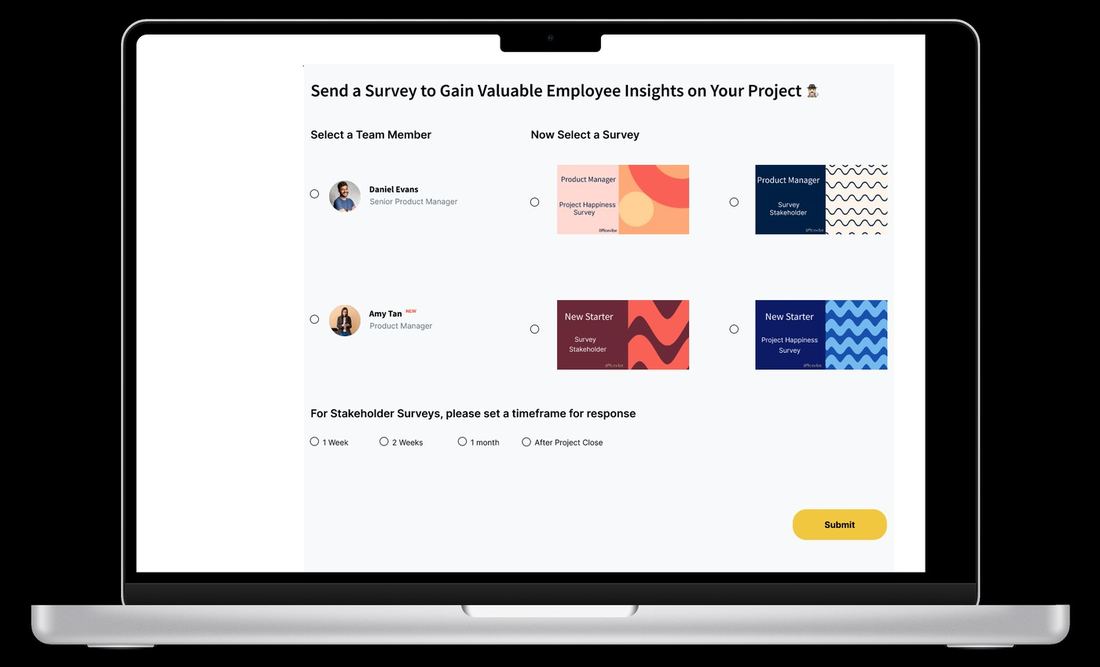
Two decisions crammed into one
Choosing a team member and a survey at once was too much. I split it into two steps — “Select a Team Member,” then “Now Select a Survey” — and refreshed the survey covers and layout.
Survey
Survey
Happiness
The clickable prototype
Everything above — the native Projects tab, the stakeholder survey, the four test-led fixes — comes together in a clickable Figma prototype, built in Officevibe’s own visual language so it reads as a first-party feature rather than a concept bolted on from outside.
The walkthrough runs the full loop: create a project, add a new starter, send their stakeholders a survey, then read the results back — every step native in Officevibe.
What the sprint taught me
The first lesson was the biggest: don’t take the brief at its word. The problem it described had been real once, but the world had moved on and the document hadn’t. Designing straight from it would have meant a beautiful answer to a question nobody was asking any more. The 0% gave me both the permission and the responsibility to redirect.
What I found in its place existed nowhere — peer appraisal of the cross-functional work a manager never sees. There was no pattern to copy, so I defined the problem and designed the first answer to it. That’s the part I’m proudest of: not decorating a known idea, but charting a new one.
õfficevibe
If I revisited it, I’d push the loop further — surfacing trends across a cohort of new starters, and tying the feedback to the moment it changes a manager’s next 1-on-1.
õfficevibe
Anil Bhima · Office Vibes · General Assembly UXDI