Galerie
Prints
A stunning exhibition of user-led design.
No hesitation.
The assignment was deliberately open: choose a real e-commerce brand — ideally local, ideally one you cared about, with an experience that needed work — and redesign it. No big brands with bulletproof information architecture. Somewhere I could actually walk in and recruit people to interview.
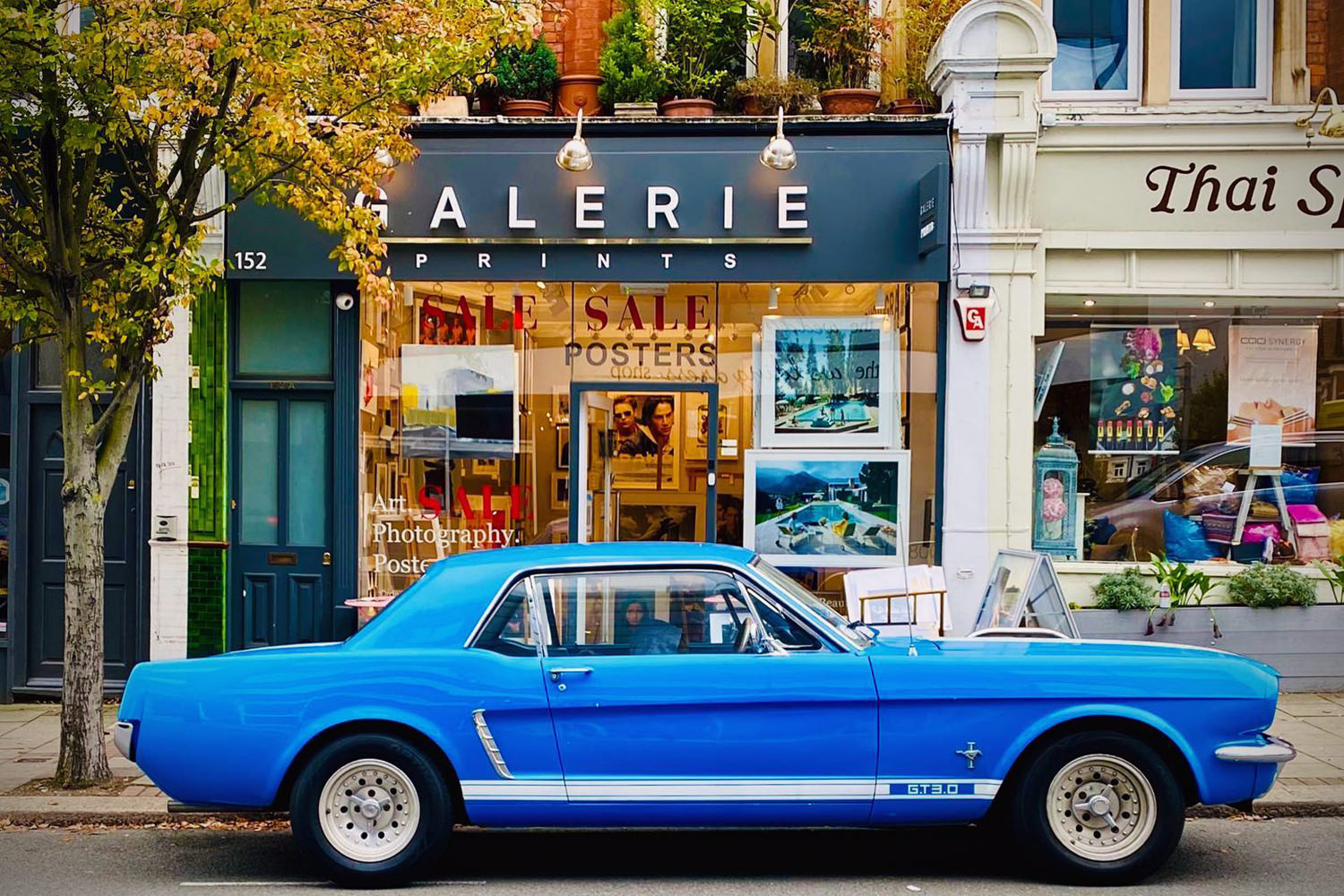
As soon as I read the brief, I didn't have a moment's hesitation. As a keen lover of photography — and a street photographer as a hobby — there was only one destination for me. It was a place I had often window-shopped at, and now here was my chance for a proper introduction. Their shop, in person, was absolutely stunning.
Now, back to the brief. Focus, Anil. The question still remained: could I improve on their branding and web design? Well — this is UX, so I'd have to put it through its paces with real users and find out. I was very intrigued, indeed.
Challenge embraced.
Galerie Prints sits in Wimbledon Park, selling everything from open re-prints to rare, signed, limited editions, with a bespoke framing and paper service behind every sale. The inventory is gorgeous; the prices run from a hundred pounds to a hundred thousand. The stakes per purchase are unusually high — and, as I'd soon learn, the website wasn't helping.
First, I had to get permission to run the study. I emailed the owner, who graciously and enthusiastically gave me his full blessing to go ahead. He was away on holiday, so I'd later meet his shop assistant, Josh, in person instead — but with permission secured, I could begin. The first job: recruit testers, and put the website through its paces.
Before any theories, I watched the site fail.
I didn't start with assumptions. I started by watching real people try to use the live site. The brief I gave them was a little story: you've had a Christmas bonus, you're moving into a new place, and you've set aside £800 for two prints — a portrait for above the living-room fireplace, a landscape for above the bed. Get them both to checkout without paying, then find the gallery's phone number to arrange a discreet delivery. Ten minutes on the clock.
First up was Sam — a former architect, now a designer, and exactly the kind of confident, spatially-literate user a site shouldn't trip up. And here's the twist: he passed. He got both prints into the basket with three minutes to spare. On paper, a success.
But passing the task and having a good time are very different things — and watching him, the cracks showed. The pages were slow to load. "Is this normal that it takes this long?" he asked, waiting on a category. "It takes ages to go to the second page, doesn't it?"
In fairness to Galerie, this was the flip side of a genuine strength: theirs is an enormous, image-rich catalogue — thousands of high-resolution prints, each offered in multiple sizes and finishes. All that gorgeous imagery is what makes the gallery special, and at the time it was also a database-and-loading issue weighing the pages down. Not carelessness — the honest cost of a catalogue that had simply outgrown its setup. (To the owner's credit, this was later addressed and optimised on his end.) A good problem to have — but, back then, it was still costing buyers at the worst possible moment.
"It's quite a long pathway to find how big it is. Sometimes I'll find something, and then it was too small, so I have to go out again." And the killer: "Some of it is in inches, and if I didn't have my measuring tape… I'd have to go up to my room. It's quite difficult to visualise how big these things are."
That tape measure became the emblem of the whole project. Think about it: a former architect — someone trained to read space and scale for a living — still couldn't judge how big a print would be from the page, and reached for a physical ruler to cope. If the site defeats him on size, it defeats everyone. It had failed at the one thing this shop needed most — helping someone believe in a piece they can't hold.
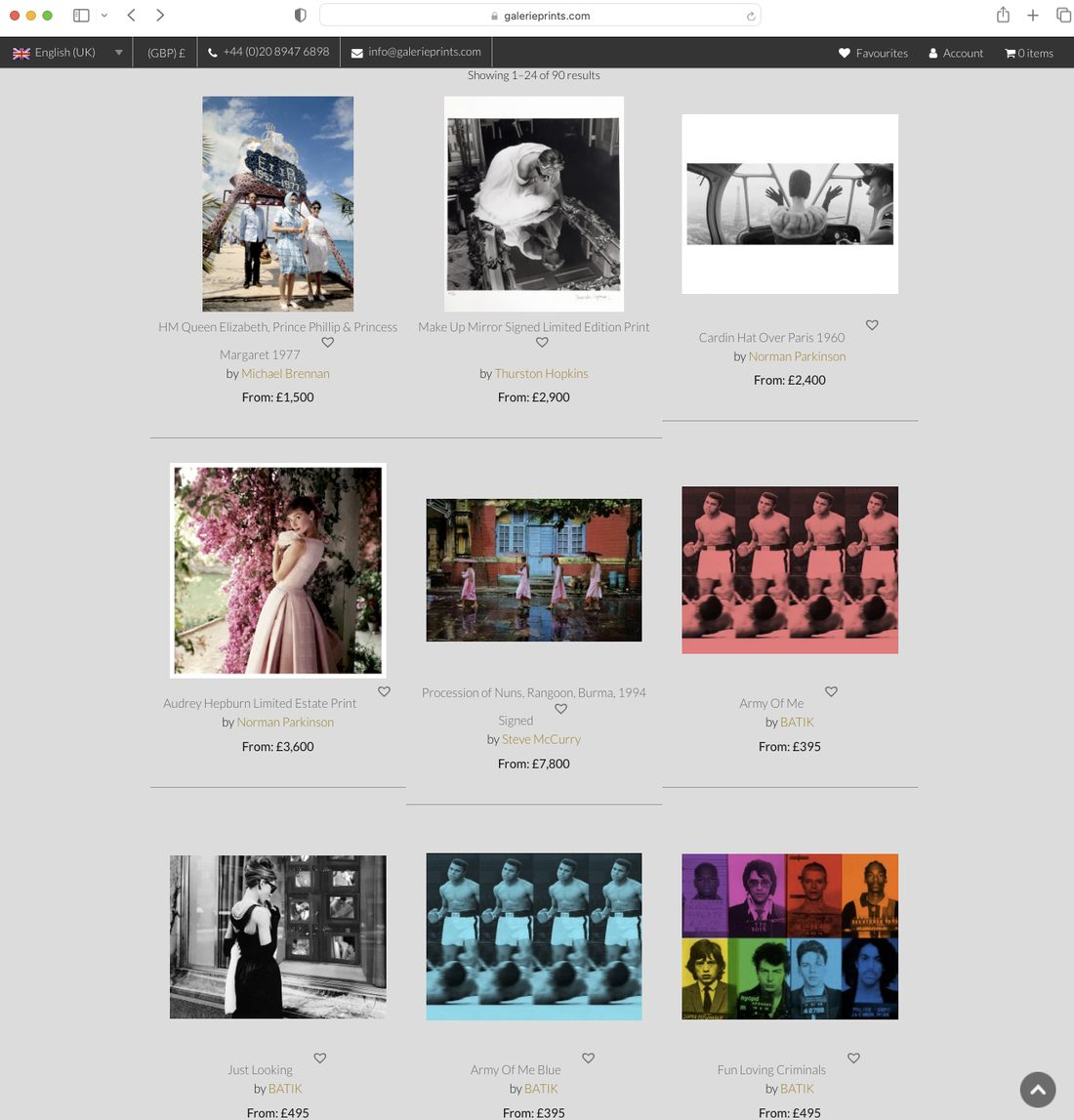
It wasn't only size. Sam was stung by the pricing too: "It says from £165, from £295… that's not a good indicator," he told me, after picking a piece he loved only to find the size he wanted cost far more. "A bit of a waste of time."
And the cruellest detail? A filter did exist on that page — Sam just never saw it. He walked straight past it and did everything the hard way. A feature nobody finds is a feature that isn't there. By the end he was practically designing the fix with me: "You need a quick-view thing… filter by price range, filter by landscape… that's really clear."
Sam could have been a one-off. So I ran the same test with Will — a UX design coursemate based in Japan, testing remotely over a screen-share on a one-gigabit connection (blisteringly fast for 2022). I wanted to rule out the obvious explanation: was it just slow broadband? If the heavy pages still dragged on the fastest line I could find, half a world away, then the cause sat with the catalogue and the database behind it, not the user's connection. And that's exactly what I saw — even on a gigabit line, the image-dense pages took their time. Confirmation that this was a real, technical, server-side issue — the kind that's very fixable, and which the owner did indeed optimise later.
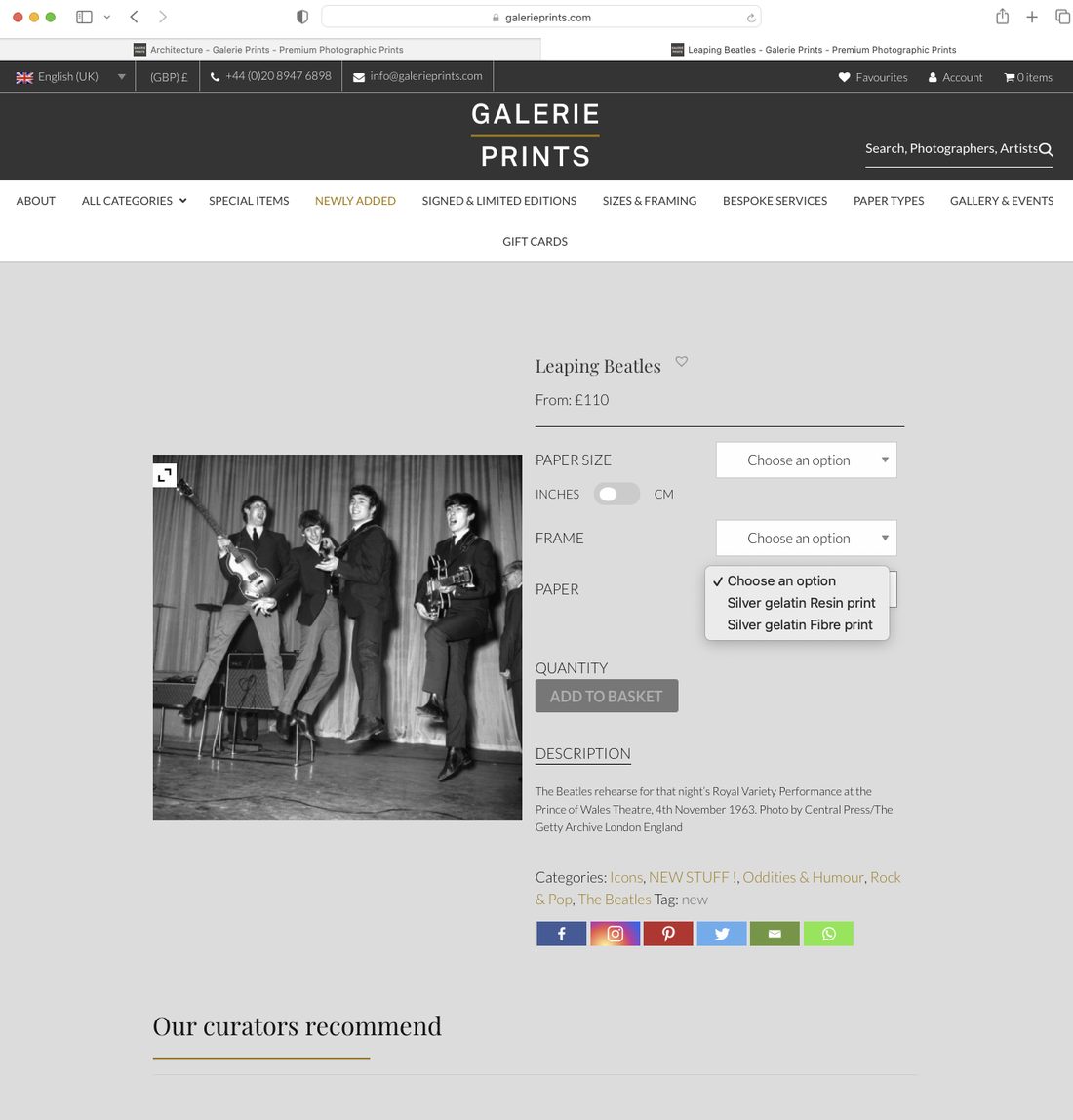
But Will handed me the bigger discovery. When he reached the paper-type selector, he simply stopped — not because he was deciding, but because he had no idea it was a decision at all:
Two testers, two confident passes — the site worked, but it made them fight for everything: size, price, paper, patience. Then came Stipica, and the site stopped working altogether.
Stipica is a Senior Product Manager. He navigates websites for a living — if anyone was going to sail through, it was him. Same task, same clock. But under the weight of all that imagery, the experience strained badly — and for him, an action as basic as adding to the basket simply wouldn't take.
He added a print to the basket and it vanished. He tried again. Nothing. He sat there, watching a page that wouldn't resolve, convinced something was downloading. By nine minutes in, he'd managed to look at a grand total of one item.
Then he said the quiet part out loud:
And then, the most human moment of the whole study. After the timer stopped, having not completed a single part of the task, Stipica looked up and asked — completely sincerely:
It was. Spectacularly so. A failed task is a failed task — but as a piece of evidence, Stipica's session was the most successful of the three. Three professionals, each an expert in exactly what the site fumbles — scale, speed, navigation — and the site beat all three. That's not bad luck. That's a brief.
I had my symptoms now. To understand the cause, I needed the people who watch buyers every day — so my next stop was the gallery itself.
Sam an architect, Will a fellow UX design student testing remotely on a flawless 1-gig line, Stipica a Senior Product Manager — different people, the same friction. When the walls repeat across each test, it stops being bad luck and becomes a brief.
Then Josh said the thing that changed the design.
I almost treated the interview with Galerie's own shop assistant as a formality — context, nothing more. I was wrong. Josh had watched three years of real buyers come through that door, and he understood something they couldn't articulate about themselves.
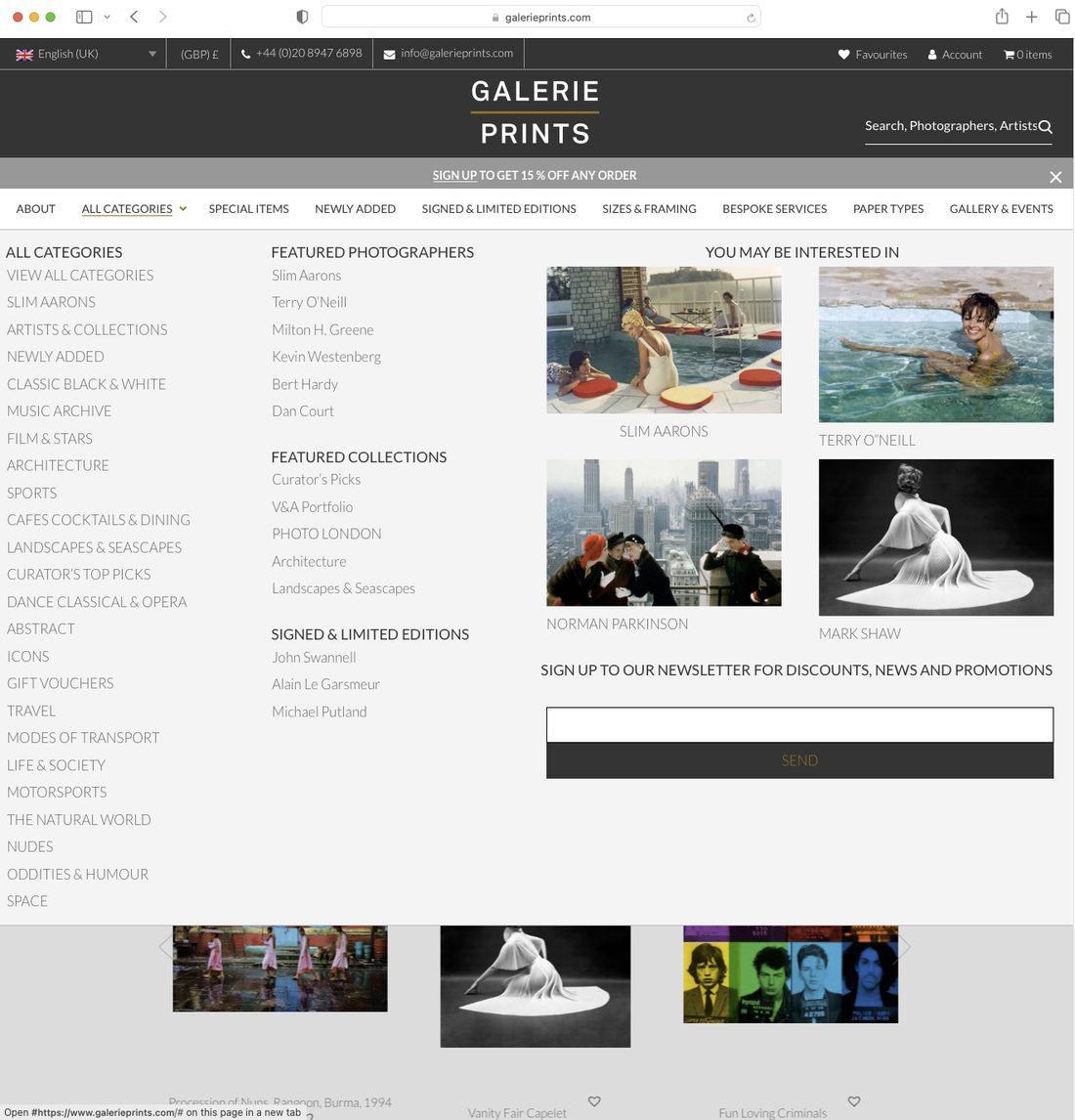
That reframed everything. The home page couldn't be a catalogue — it had to be a gateway. Lead with the names and the feeling; let discovery do the selling.
But it also exposed a deeper problem hiding inside Josh's insight. Slim Aarons works as a gateway because he's the one name people happen to recognise. Most buyers don't know the artists at all. This is exactly what I'd later hear from the buyers themselves. What they share isn't knowledge — it's instinct. They can't name what they want, but they know it the instant they see it.
So how do you build a gateway for people who don't know a single name to walk through?
I parked that question — it would become the most important feature in the redesign — and went to see how the rest of the market handled it. If anyone had cracked discovery, the big art platforms would have.
So I took the competition apart, screen by screen.
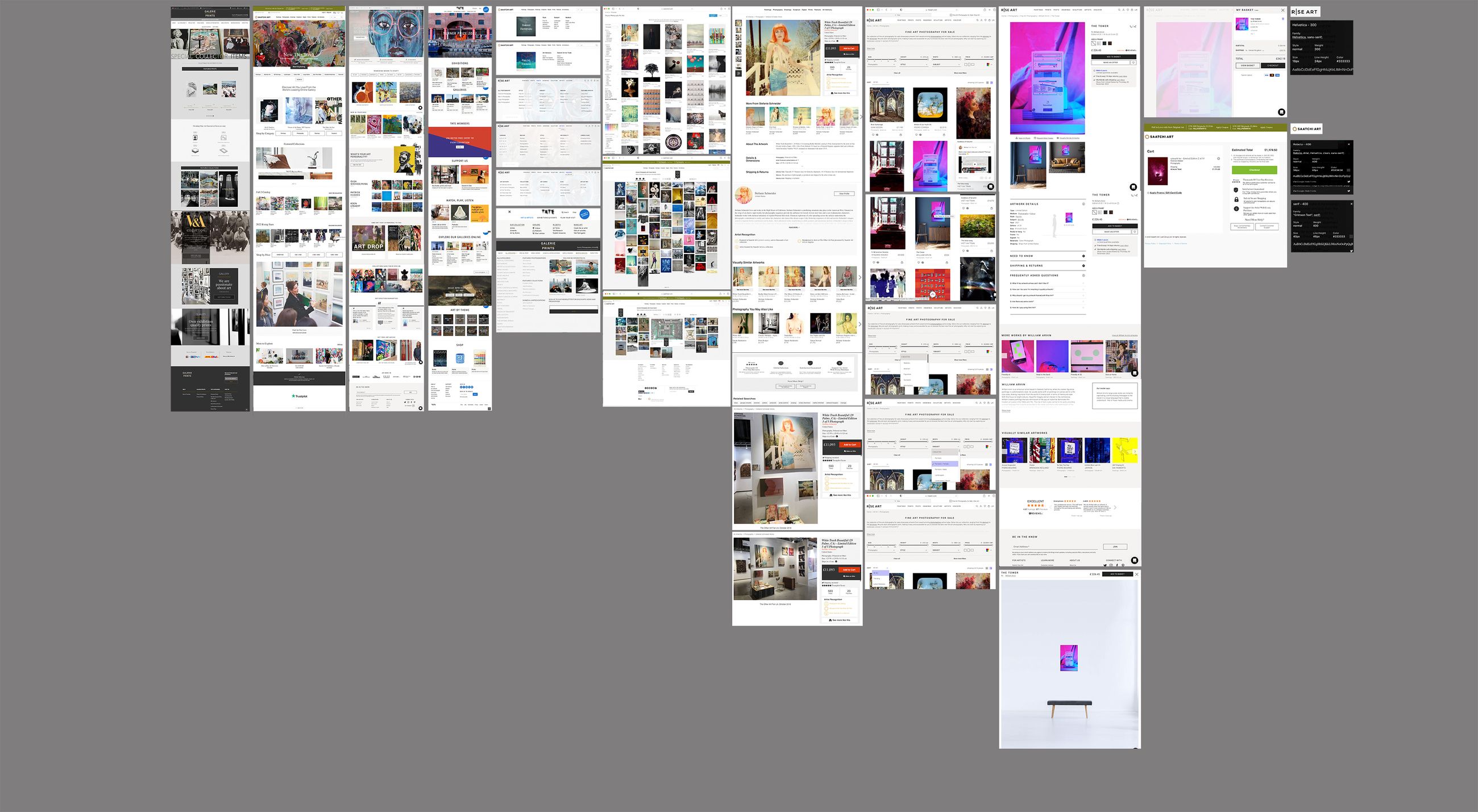
Before I designed anything, I wanted to know what "good" looked like in this exact market. So I went deep — capturing and dissecting the full user journeys of the best art-buying sites out there: Saatchi Art, Rise Art, and the Tate, alongside Galerie's own live site for comparison.
Laid out side by side, the pattern was impossible to miss. The market leaders had quietly solved nearly everything Galerie's site struggled with — and a few of their ideas pointed straight at the solutions I'd go on to build upon.
Saatchi Art · Rise Art · Tate
- Intuitive filtering — price & size sliders, orientation, colour
- Scale shown in real rooms, against furniture
- "Visually similar" & "you may also like" discovery
- Saatchi's "What's your art personality?" quiz
- Clear provenance, reviews and trust signals
Galerie Prints, as it stood
- No price filter — pricing was hard to browse by
- A menu that asked a lot of back-and-forth
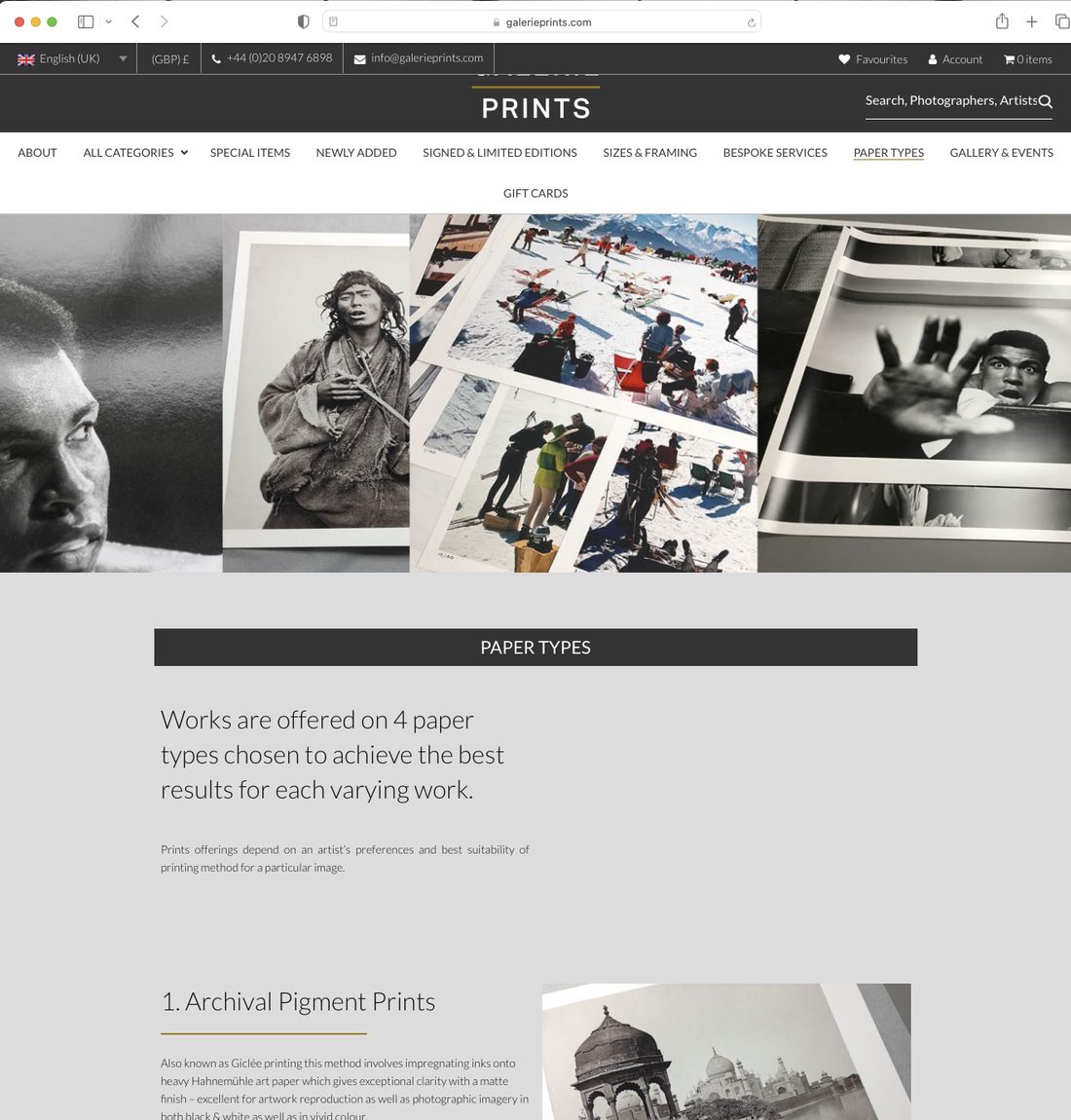
- Size hard to judge; paper guide on a separate page
- A vast, image-heavy catalogue straining page speed
One competitor detail reinforced a direction I'd already been circling. Saatchi's "What's your art personality?" runs on visual-AI from a company called Visii — whose founder I'd met years earlier, so I understood that approach first-hand. Seeing it live only confirmed the instinct: people want to discover art by eye. The question was how to give Galerie that benefit without the enterprise price tag — and that became my signature feature, a few chapters from here.
The other borrowed idea was scale: the way both Saatchi and Rise Art showed prints hung in real rooms became my answer to Sam's tape measure — the in-situ scale shots.
So I went and found the buyers themselves.
I'd seen the site fail, heard the gallery's view from Josh, and studied how the market's best did it. Now I needed the people who actually part with the money — how they really shop for art online: the emotion, the hesitation, the moment they decide. Three of them let me in. They could not have been more different, and that difference became the whole project.
Martina buys the way most people now do: she follows an illustrator, a print catches her eye, she taps through. Her last purchase was a When Harry Met Sally print — a Christmas gift for someone who loves the film, about £25. No destination site, no category search. Pure discovery.
She rents, with no gallery wall yet, so she caps herself at roughly A3 and around a hundred pounds. And she'd happily use AR — just never thought to, for art. "Not for art. For IKEA furniture," she laughed.
Alan won't buy unless he has confidence in the seller. If a piece is new to him, he researches the outfit, reads Trustpilot, and — his words — might even phone them up to do his due diligence. His last buy was an £800 spray-acrylic Scottish cow from a harbour gallery in Padstow: he viewed it online, then drove there and collected it in person. The physical shop wasn't incidental — it was the reassurance that unlocked the purchase.
He buys for enjoyment, not investment, and reframes pieces to match the room. He's also returned art that didn't look like it did online. And a slow site? He's gone.
Rohan furnished his entire house off the internet. "Convenience mostly. New house, need to get it done up." He finds everything through Instagram and Pinterest targeted ads — which work on him, he admits, "a bit too well." He doesn't follow artists; he just sees something he likes and gets it. His last piece was a £150 stamp illustration; he'll go up to around £1,000 if something grabs him — price isn't the driver, liking it is.
He has zero patience for friction — and he'd already met the future I wanted to build. One site let him scan a wall and see the piece on it. The dimensions problem, solved. He lit up talking about it.
So I distilled three buyers into one.
Martina, Alan and Rohan arrived by different routes and spent wildly different amounts — but underneath, they wanted the same five things in the same order. So I did what the research was begging for: I merged them into a single persona — Seb — and mapped the one user flow that would serve all three.

Meet Seb, the feeling-led buyer
Discover by eye
Arrives by feeling, not by name — wants to stumble onto the right piece.
→ Visual Search · gateway homeBrowse to a budget
Needs to narrow by price, size, orientation — fast.
→ Filterable side menu · "under £500"Judge the scale
"Will it work on my wall?" The size question that kills confidence.
→ In-room scale shotsDecide in place
Understand paper & frame without leaving the purchase.
→ Paper types inline · live totalTrust the big spend
Above ~£500, needs proof it's real before committing.
→ Reviews · provenance · the physical galleryOne persona, one flow, five moments — and every moment now had a fix to design toward. The three buyers had written my build list for me.
The same doubt, in every voice.
Three buyers, three completely different wallets — Martina's careful hundred, Rohan's easy impulse, Alan's considered thousand. I expected them to disagree about everything. Instead, the same quiet anxiety kept surfacing, no matter who was talking.
They couldn't tell how big the art was. Not really. Frame, mount, the actual dimensions on a real wall — it was always a guess. And when people guess on something they're paying for, they hesitate. Rohan put it most plainly:
Then there was the second doubt — friction. Both Rohan and Alan told me, independently, that a slow or fiddly site simply loses them. They don't push through. They leave.
And the third — trust. The moment a price climbs past about £500, the whole posture changes. Alan researches, reads reviews, phones the gallery. The easy-going buyer becomes a careful one. A physical shop behind the website, they all agreed, made the risk feel survivable.
Two kinds of buyer, pulling opposite ways.
As I mapped them, the buyers split into two camps — and the split was the design problem in miniature. Whatever I built had to serve both without compromising either.
The discoverers
Arrive by feeling, through a feed. Lower price points, faster decisions, zero patience for friction. They need to stumble onto the right piece — and instantly see how it fits.
The considerers
Arrive with caution. Higher spends, slower decisions, heavy due diligence. They need reassurance — provenance, reviews, a real gallery behind the screen — before they commit.
Discovery for one, trust for the other, and a fix for the size problem they all shared. That was the brief the people had written for me — far more useful than the one on the page.
So I sketched the gateway.
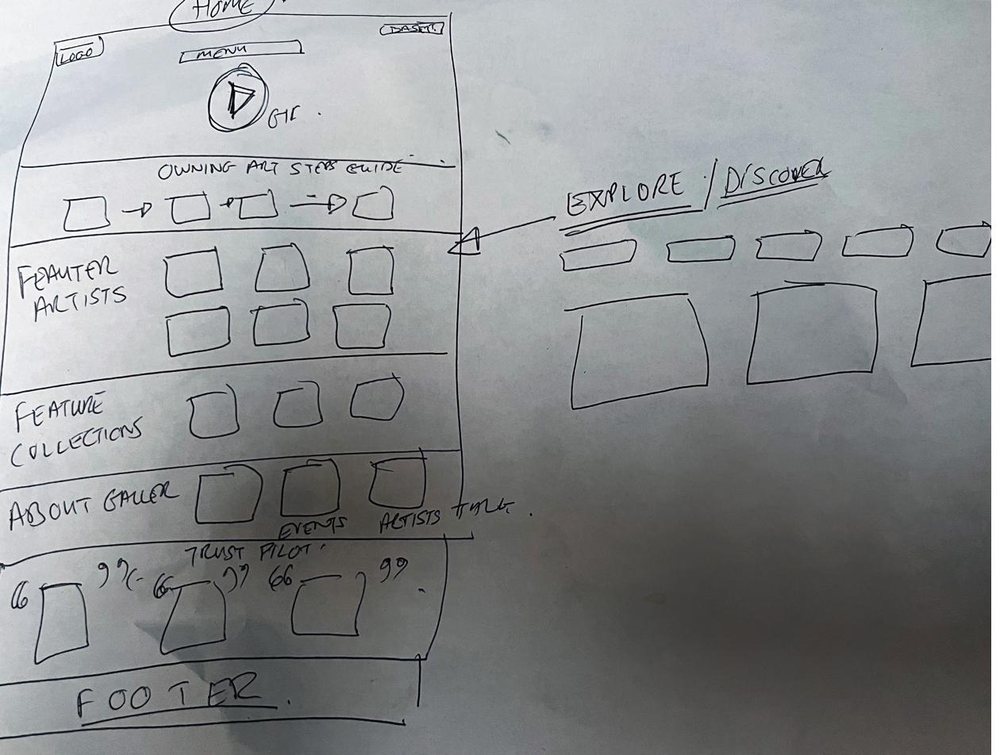
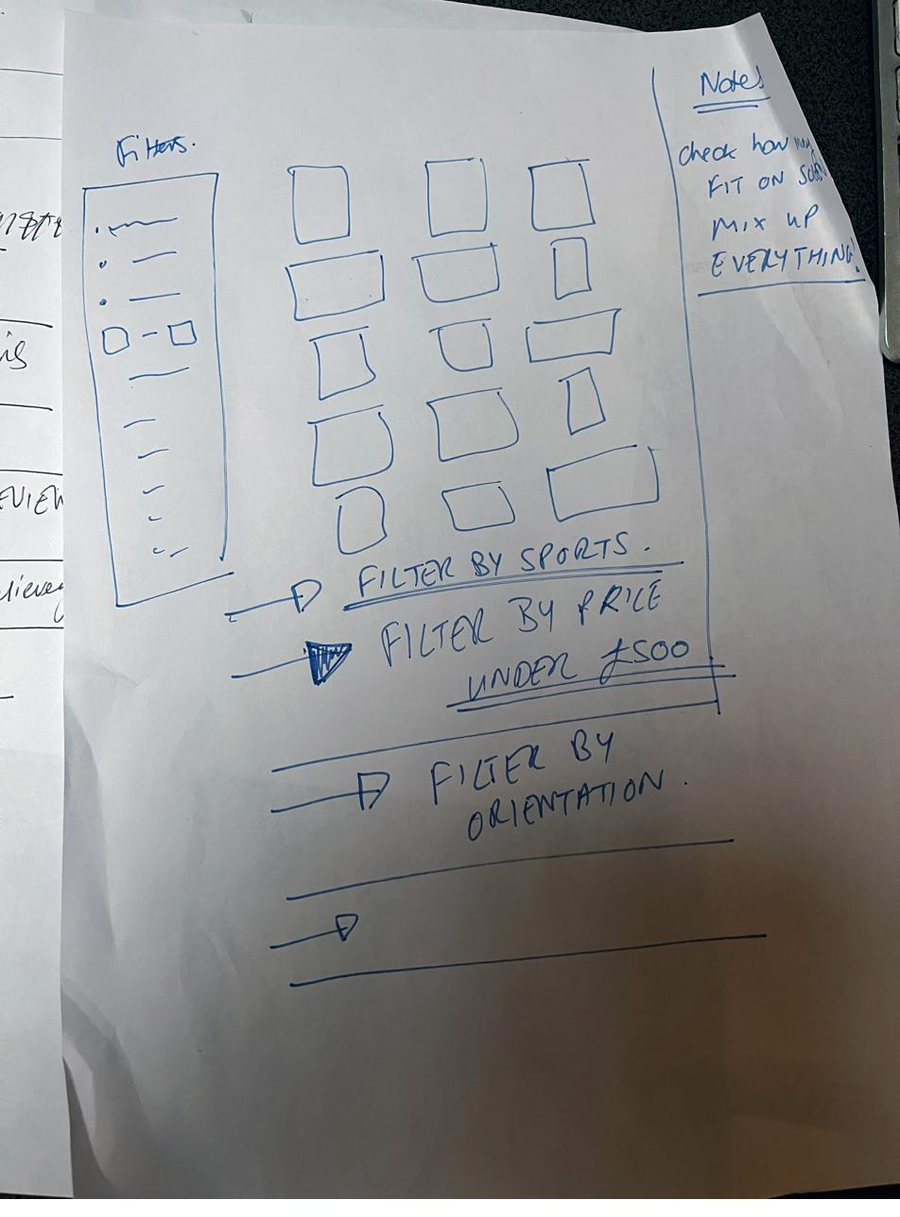
With the people in my head — Martina's size anxiety, Rohan's impatience, Alan's caution, Josh's gateway — I sketched the spine. A home page built around discovery, and a shop page where filtering by price, size and orientation finally existed. My own margin note, scrawled at the time, said it best: "mix up everything."
A gallery you can actually shop.
Everything the ten people taught me, built into one flow. Lead with discovery for Martina and Rohan. Build trust in for Alan. And answer the size question nobody could shake. Here's the walk-through — the same path a buyer takes, screen by screen.
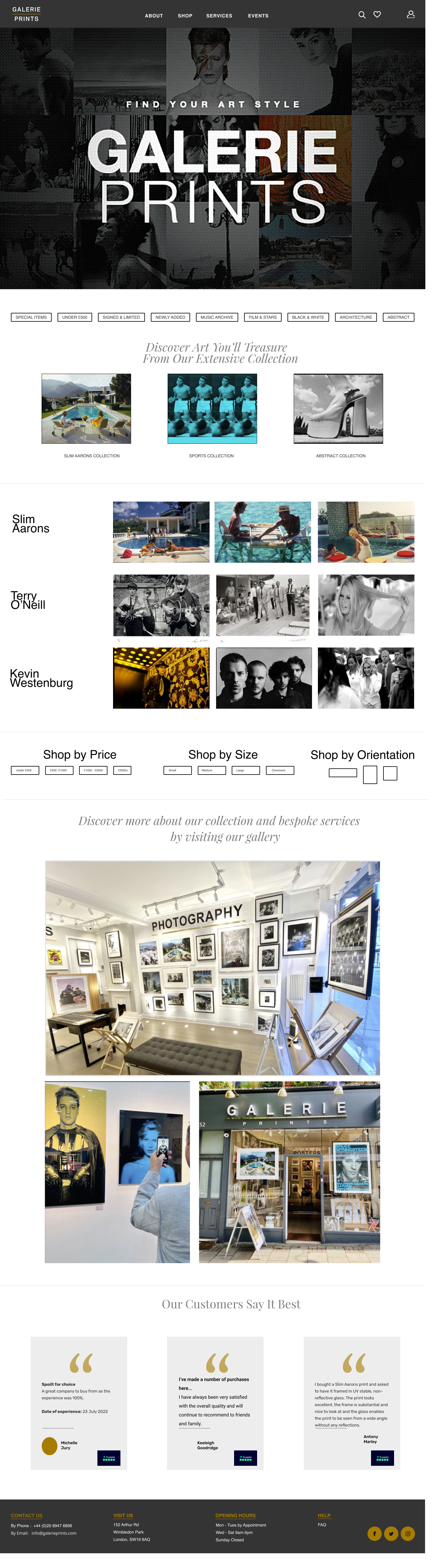
The gaze that pulls you in
The home page opens to a "Find Your Art Style" intro to sell the new Visual Search feature. Below it, the names that do the pulling: Slim Aarons leads, with featured artists and shop-by-price, size and orientation right there on the landing page. That's a deliberate, direct answer to the Website Usability Test finding — no ability to search items by price or size — surfaced before you've even reached the shop. And the price tiers aren't generic: there's a dedicated "Under £500" box, because that's the buyer-agreed tier where people don't overthink the purchase. Above it, the spend becomes considered.
This is Josh's gateway as a layout — recognise a name, fall for the archive. It answers the Shop Assistant slide directly: people came in for Slim Aarons, and he was their gateway to discovering everyone else. So I put him first.
Lower down, two more answers — this time to the Buyers slide. They told me that over £500 they research the shop, read reviews, and trust an online store far more when it has a real-world counterpart. So the home page now surfaces the physical gallery — interior and shopfront — and the footer carries Trustpilot reviews: "Our Customers Say It Best." The reassurance that unlocks the bigger spend, built into the first screen they see.
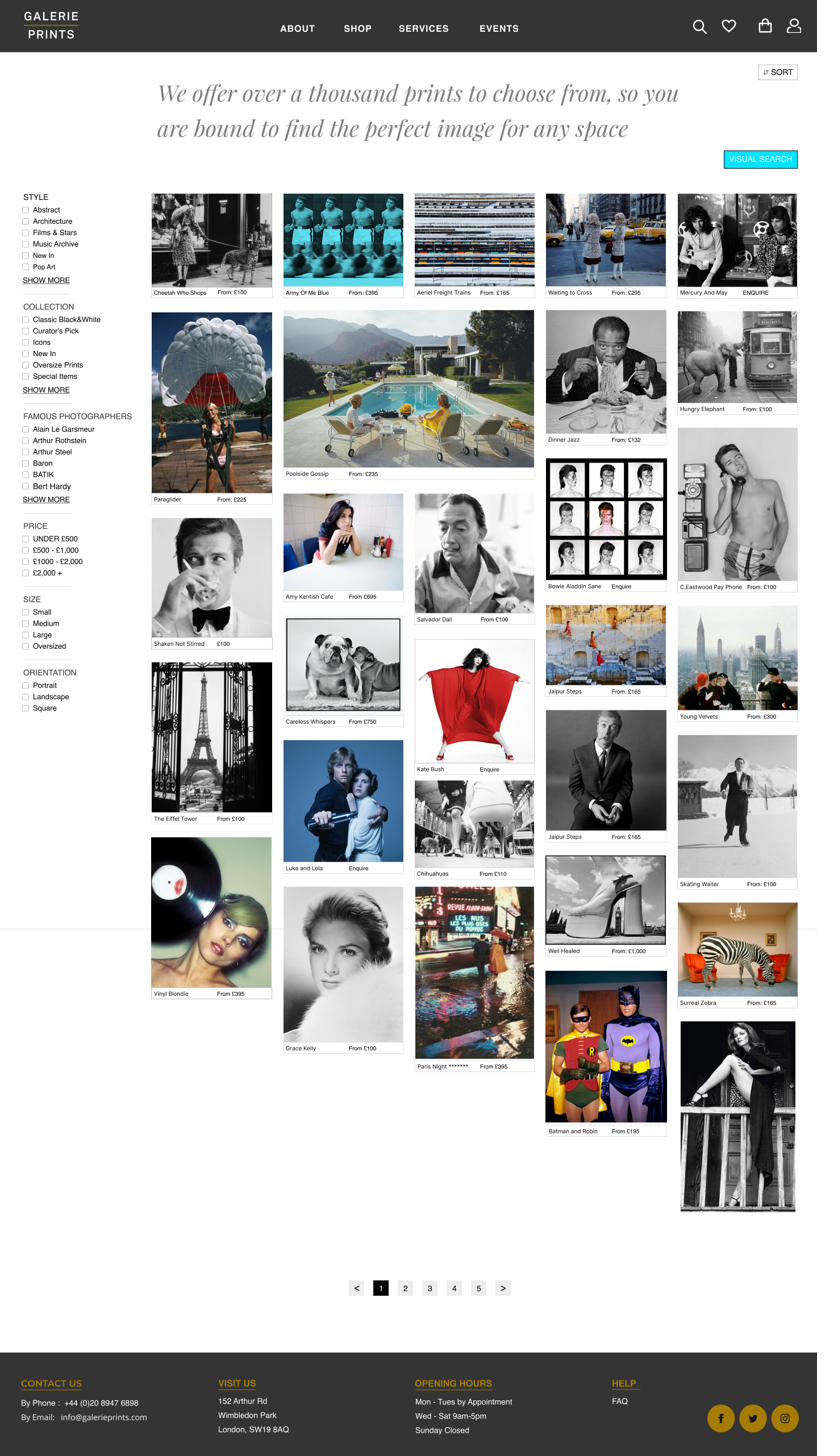
Filter by price, size & orientation
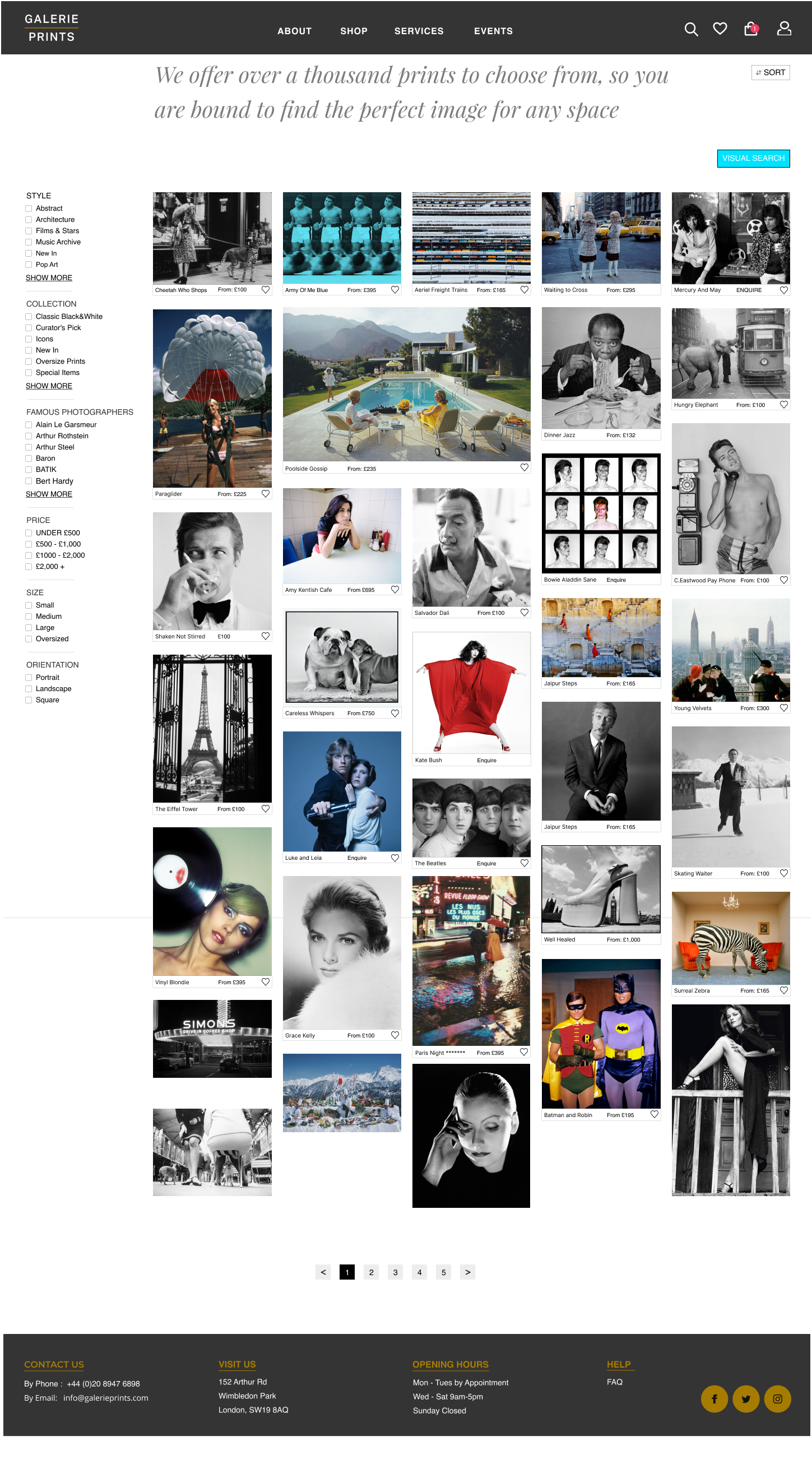
Nothing on this screen is invented — it's the research, made literal. The leftmost column is a filterable side menu with six facets: style, collection, photographer, price, size and orientation. As you change a selection, the grid reacts dynamically — the catalogue narrows in front of you, no page reload, no hunting.
This is also the answer to a finding that's easy to overlook: on the live site, the UI got in the way of search — testers struggled so much they just grabbed something quickly to finish the task. Stipica felt it most sharply; when I asked whether he'd been able to find something within his budget, he admitted he simply couldn't. Here the side menu does the opposite. Every option is present and to hand, yet it stays out of the way down one quiet column, and the shop content adjusts itself to each selection. The interface stops being the obstacle and becomes the tool.
The side menu answers the competitor benchmark directly: the one thing Saatchi and Rise Art both did well was intuitive filtering on both — price and size sliders, orientation, colour. This is my version of that, and it resolves two separate failures Sam and Stipica had hit on the live site. Sam fought an unintuitive, back-and-forth menu; Stipica fought prices that felt random with no way to browse by them. Both of them, mid-test, started designing this exact fix with me — Sam: "filter by size, by price… that's really clear," Stipica, on filtering by price: "Absolutely."
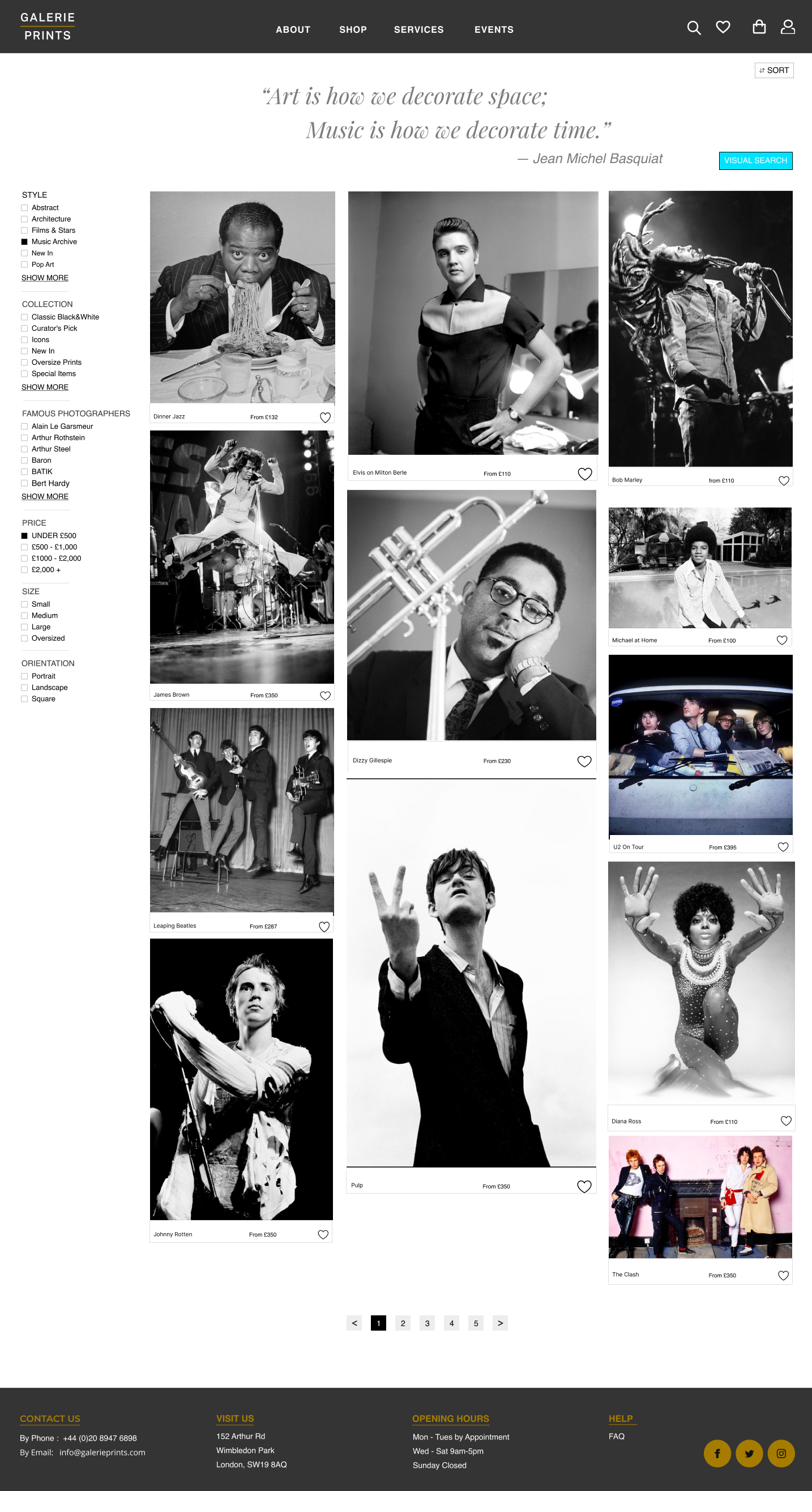
The £500 line, built into the interface
That "under £500" filter isn't arbitrary — it's Alan's exact trust threshold, the line where easy-going becomes considered. Below it, the discoverers relax; above it, the page starts working harder to reassure.
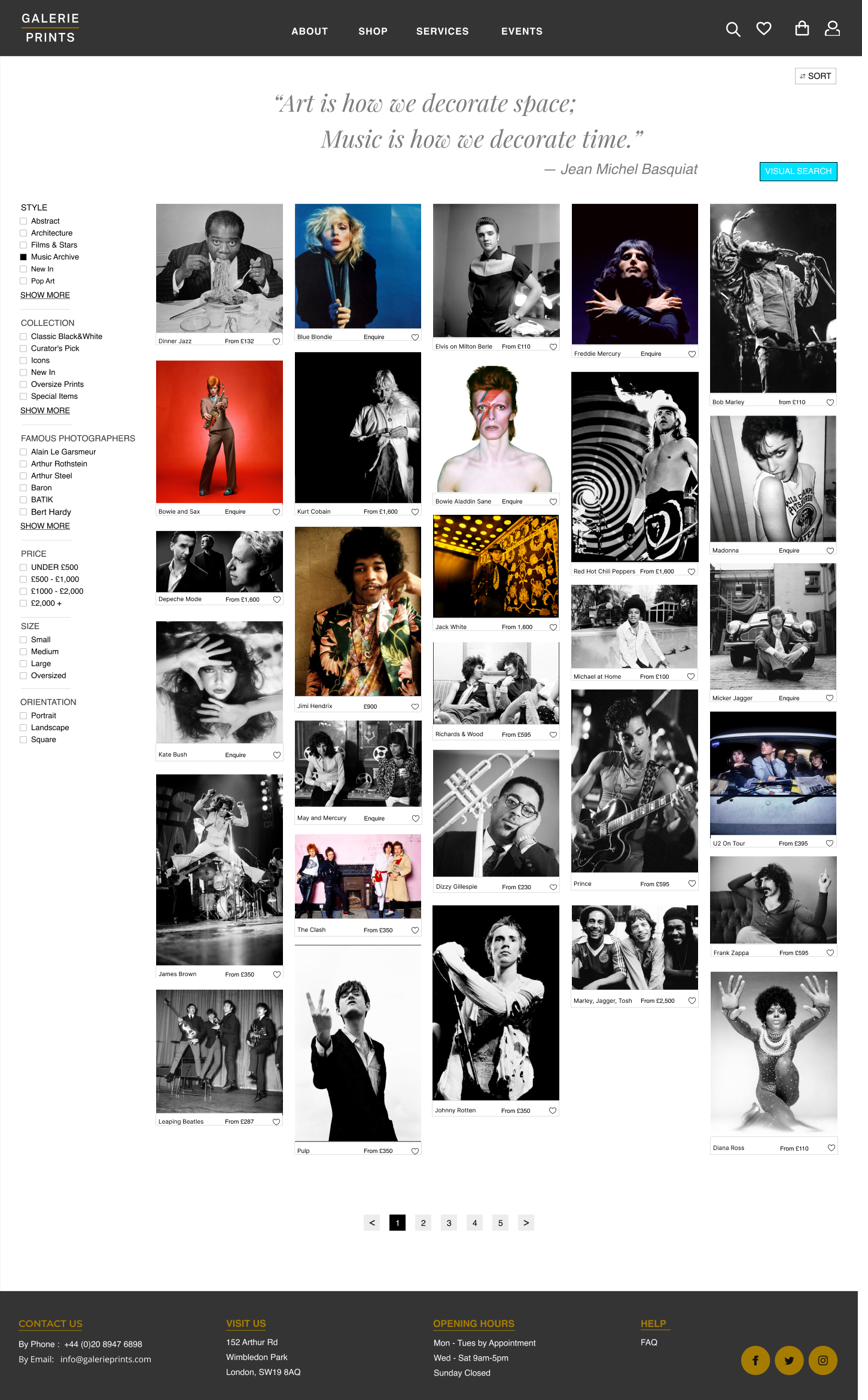
Collections people actually browse
Themed archives give the discoverers a way in. "Art is how we decorate space; music is how we decorate time." It turns an overwhelming catalogue into rooms worth wandering — the digital version of getting lost in the shop.
No one has to leave to decide
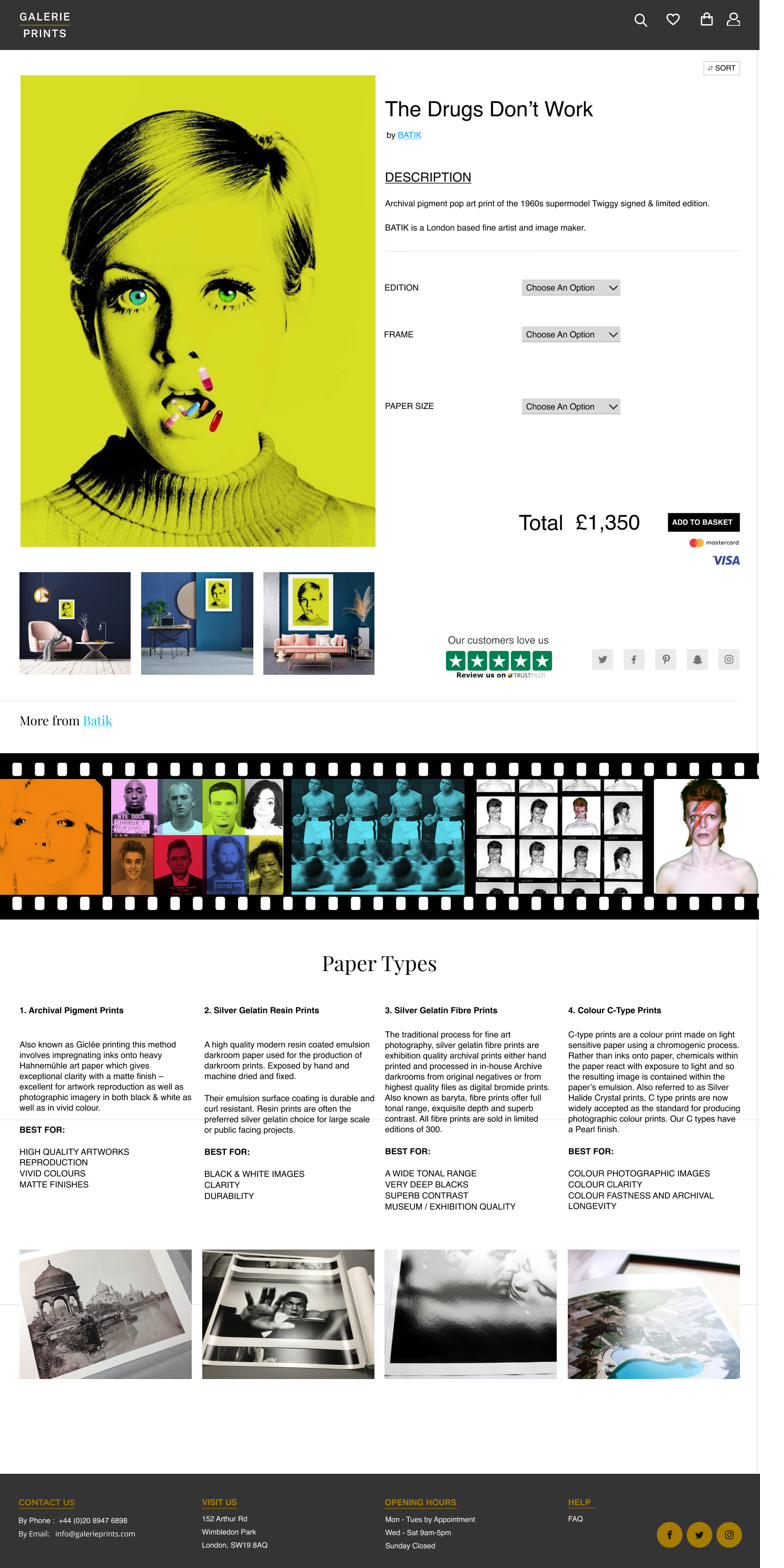
Edition, frame and paper-size selectors, a clear running total, reviews — and the four paper types explained inline: archival pigment, silver gelatin resin and fibre, C-type.
On the live site, choosing a paper threw you off the page mid-purchase. Exactly the friction Rohan said makes him "just skip." Here, the decision stays in one place.
This was the single biggest fix, and it answers the presentation's Paper Type Request finding directly. Before purchase, buyers are sometimes asked to choose a paper type — but on the live site the paper guide sat on its own separate page. Understanding your choice meant leaving the piece mid-purchase, reading up elsewhere, then finding your way back. During usability testing this back-and-forth — made heavier by how long the catalogue's rich, high-resolution pages took to load at the time — was exactly the kind of moment that pulls someone out of the experience and can quietly cost the sale. So I put everything on one page: choose, read about the paper, and watch the running total, without ever leaving the print.
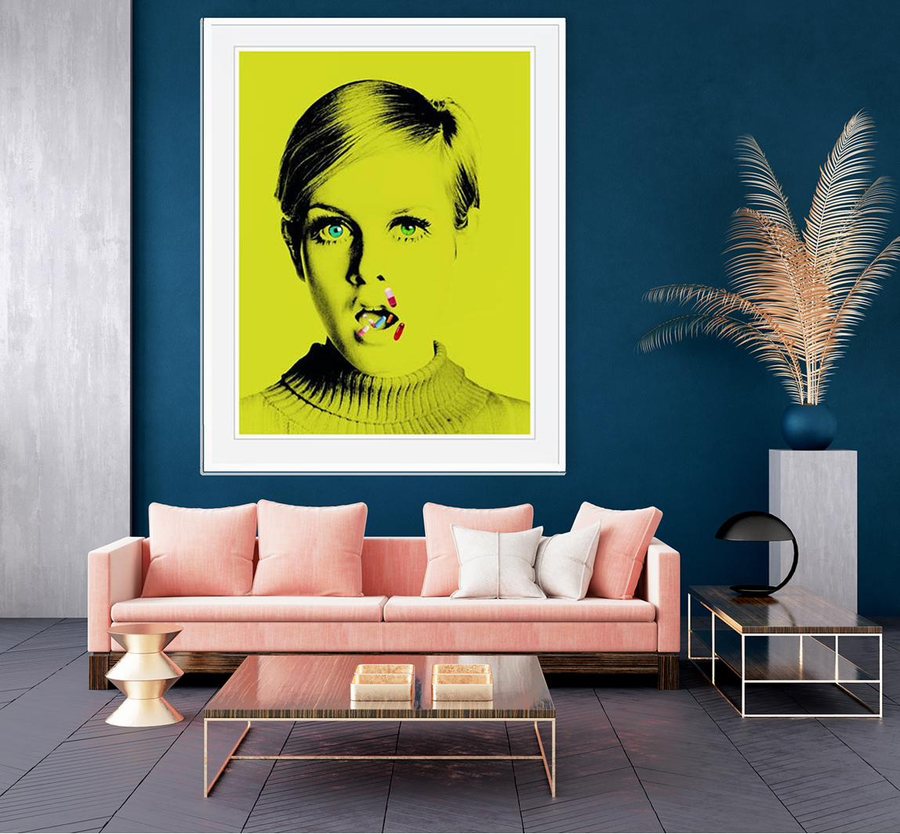
And just under the print sit three in-room scale shots — the same Twiggy print hung at different sizes in real, furnished rooms. This answers two findings at once. The buyer interviews named it as a pain point in plain terms: difficulty guessing the dimension and size of art. Martina put it in her own words — it gets "a little bit tricky when you're trying to figure out sizes… if a frame size or if they have a mount around it" — and Rohan's fear was blunter still: "often you can buy a piece, and you visualise it wrong." The competitor analysis showed the bar — Saatchi, Rise Art and others all illustrate scale on the wall, with Saatchi going as far as its own AR app. Seeing the piece sized against a room, against furniture, is how you finally judge how big it lands. Sam reaching for a measuring tape is a thing of the past.

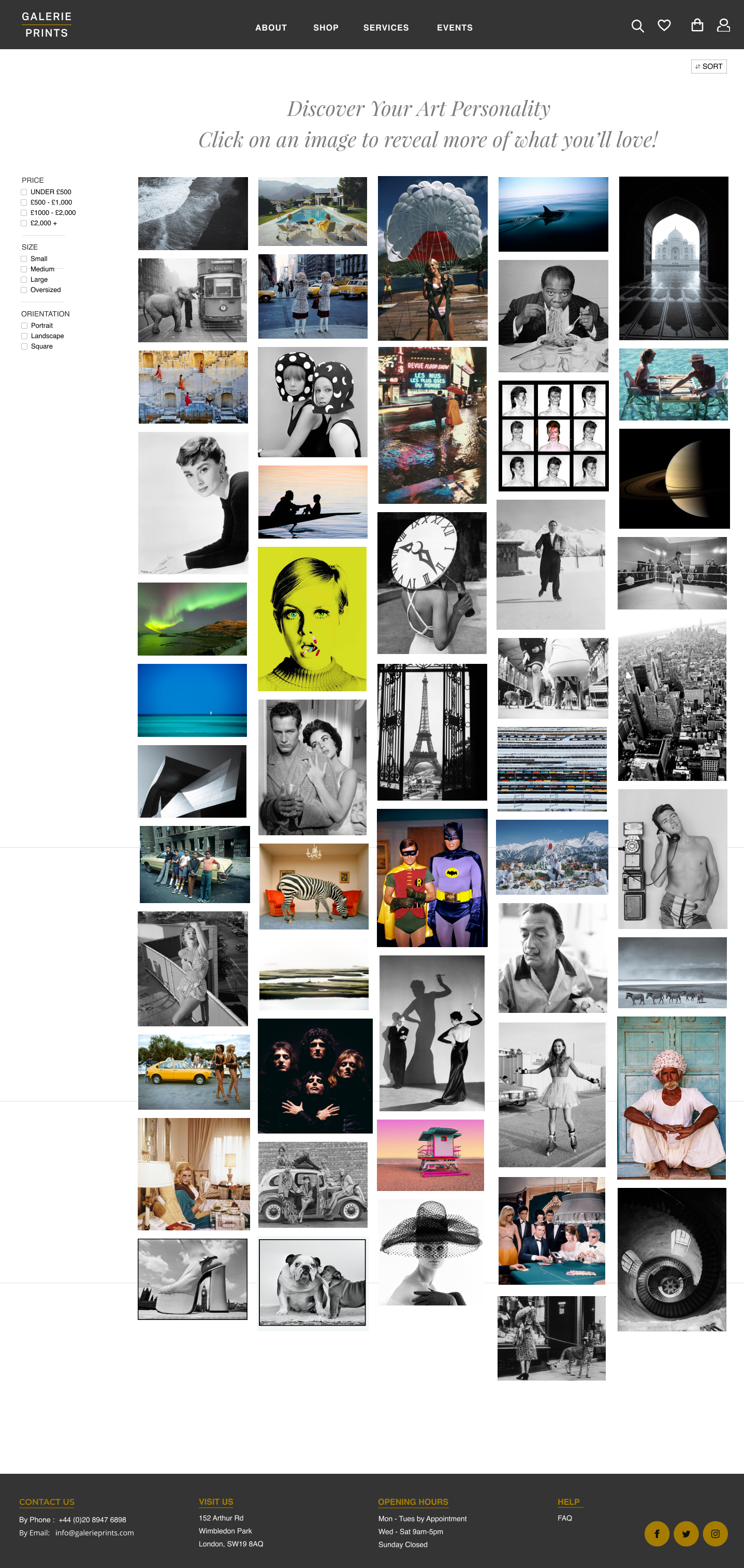
Visual Search — a gateway with no names at all.
This is the feature I'm proudest of, and it answers the Shop Assistant Interview head-on. Josh's key takeaway was that Slim Aarons is their gateway for customers to discover other artists — and how they generate further sales. If buyers don't know the artists but recognise what they love the instant they see it — then don't make them search by name. Let them browse by eye. So I built Visual Search: I sub-categorised the whole catalogue by visual style — drilling right down, even to colour — and laid it out as a clean, browsable gallery. Pick what draws you, and it opens onto more in the same vein.
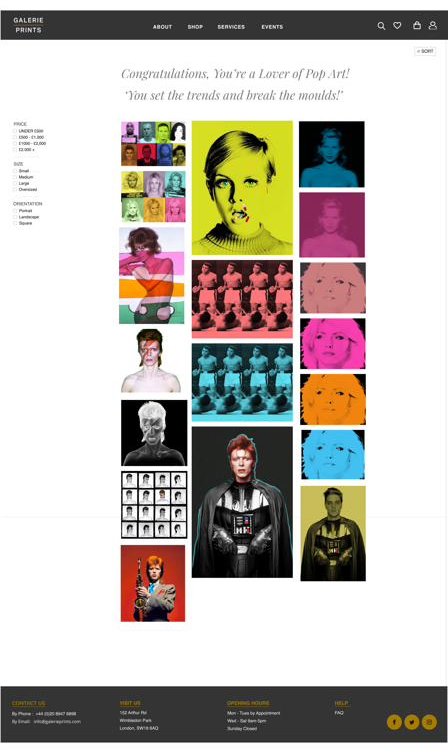
It also answers a line from the Competitor Analysis: the bigger players use AI to help users find art work they might like. Here's the part I'm proudest of — and it's a business decision as much as a design one. The enterprise version of this is expensive: Saatchi's discovery runs on visual-AI from a company called Visii, whose founder I'd met years before, so I knew exactly what that road costs to build and to license, year after year. An independent shop like Galerie can't carry that.
So I gave them most of the benefit for no ongoing cost — something the owner can curate and run himself. And that's not a compromise, it's an advantage: he knows his customers and his images better than any algorithm ever will. A hand-built style taxonomy turns his expertise into the feature, instead of renting someone else's black box.
And it finally makes Josh's gateway swing both ways. People still arrive for the big name — Slim Aarons above all. But browsing by style means that one famous name opens onto the lesser-known artists working in a similar, likely-inspired vein — so even a seasoned collector who came for Slim leaves having discovered someone new. The gallery's quieter artists finally get found.
It works just as well from the other end. Someone like Rohan — new home, bare walls, no idea where to start — can wander in knowing nothing and discover whole styles he loves. That's the real reach of it: a great entry point for someone who doesn't know a single artist's name, and, just as much, a way for an experienced collector to discover new artists they'd never have searched for. From the complete newcomer to the seasoned buyer, browsing by eye is open to practically anyone. That's the gateway Josh described, finally built for everyone who walks through it.
Trust, where the big spend happens
The basket and checkout keep the running total, delivery and provenance in plain sight, reviews and the physical-gallery story close by — exactly where the considered buyer looks before committing the thousand pounds.
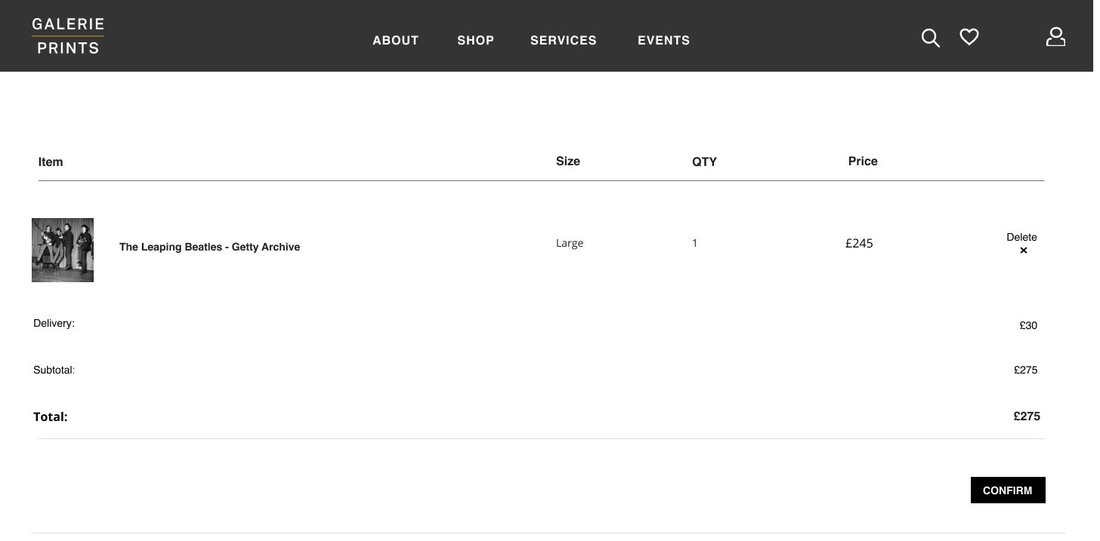
A checkout that doesn't fight back
One screen, a clear total, a single confirm. The friction that made Rohan "just skip" is gone. The flow finally gets out of its own way.
Then I made two of them come back.
Here's where it gets satisfying. For the prototype test, I deliberately re-recruited Sam and Stipica — the architect who'd reached for a tape measure, and the Senior Product Manager the heavy pages had ground to a halt on. The same task that had defeated them before: find a Beatles print under £500, choose a paper, reach checkout. I wanted to know if I'd actually fixed their problems, not just problems in the abstract. And I added Anna — fresh eyes who’d never seen the original site at all.
The result in one line: the testers who failed the live site passed the redesign. Sam in two minutes, Anna in two, and Stipica straight through the basket that had collapsed on him a week earlier.
But the pass rate isn't the story. The story is what they noticed — because the thing they all poked at was the exact fix I'd built for them.
Remember the paper-type off-ramp? On the live site, Will picked his paper blind and Stipica had to open a separate tab he called "a hurdle." So in the prototype I pulled the paper types onto the product page. And the moment Sam hit it, he caught it:
Stipica caught it too. The Senior Product Manager who'd called the live-site detour "a hurdle" reached the same spot on the prototype and clocked it straight away: "Because it's on the same page, right?" The two testers who'd been most stung by the original off-ramp both recognised, unprompted, that it was gone.
Even better was the scale fix — because Sam had personally inspired it. On the live site he'd reached for a tape measure. So when I built the redesign, I did exactly what he'd done: I grabbed a measuring tape, found a chair in one of the room shots, worked out it was about three foot, and used it to size the print accurately on a real wall. Then I rendered the same print at different sizes in real, furnished rooms — so a buyer could finally judge how big it lands without owning a ruler.
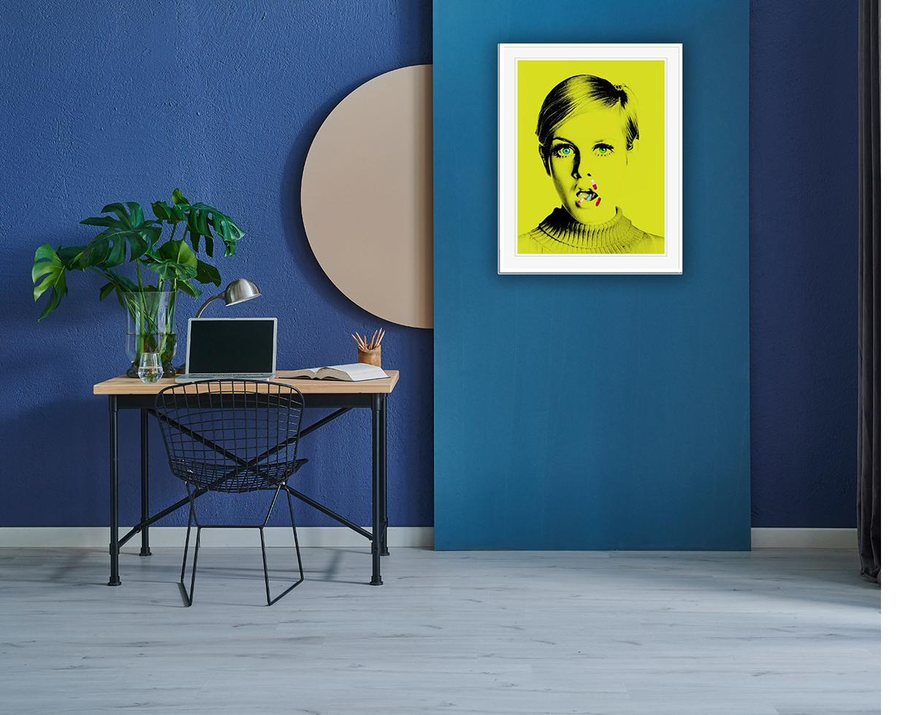
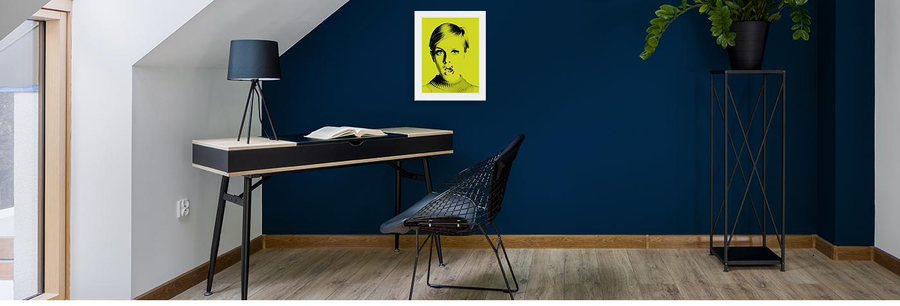
When I showed Sam, he laughed — "that looks good… that's great." The buyer's coping mechanism had become the design solution. The very thing he'd improvised to survive the old site was now built into the new one.
Then they did what good testers do — they found the next problem. All three converged on the same refinement, completely independently: the "learn more about paper" prompt needed a clearer way in.
Stipica wanted it as a pop-up overlay so he'd never lose his place — "keep my interest and my focus there." Anna wanted an obvious click affordance. Sam, when I described the pop-out idea, agreed it was probably the move. Three people, three angles, one shared verdict: the inline paper info was right, but the way in needed to be louder. This was the "one thing" my presentation flagged as unresolved — and I left it that way on purpose. When three smart testers solve the same detail three different ways, the honest move isn't to pick one and pretend it's validated; it's to name it as the next iteration and say so out loud. Knowing when not to force a fix is its own kind of design judgement.
And that's the difference between the two rounds in a single image. On the live site, my testers fought the basics — pages straining under all that imagery, filters they couldn’t find, a tape measure at the desk. On the prototype, they'd sailed past all of that and were arguing about whether a paper link should be a button or an overlay. The floor had moved up. That's what a redesign is supposed to do.
Ten interviews. Ten days. One very tired designer.
Don't take my word for it — watch it work.
Everything above was research and stills. This is the payoff: two flows, driven end to end. First the purchase that stalled three professionals on the live site — discover, filter to a budget, judge scale, choose paper, checkout. Then the feature I'm proudest of: discovery by eye, for the buyers who can't name an artist but know it the moment they see it.
The task that defeated three professionals on the live site, start to finish: discover by eye, filter to a budget, judge the scale on a real wall, choose a paper without ever leaving the page — every fix the research asked for, in one unbroken run to checkout.
The answer to Josh's insight that most buyers can't name an artist but know it the instant they see it. Tap an image, the prototype reads your taste, and opens onto a whole world in the same vein — here, a lover of Pop Art, led straight to the piece they didn't know they were looking for.
The earlier test defeated Stipica, and put Sam through the wringer.
Stipica never completed a single part of the live-site task — the page broke under him. Sam got there, but fought it the whole way, arming himself with a tape measure to survive. On the prototype, both sailed through.
When the people who failed your old design — or barely scraped past it — complete the new one without a hitch, that's the clearest evidence the redesign actually worked!
What the people taught me.
Three years on, revisiting this, the lesson isn't in the screens. It's in how completely the ten of them rewrote the brief I thought I'd been given.
The real problem was scale, not the cart
I came in assuming checkout. Sam's tape measure — and every buyer after him — pointed somewhere quieter: people couldn't judge size, and that uncertainty killed confidence long before the basket.
One sentence from the shop floor became the signature feature
Josh's "Slim Aarons is the gateway" revealed that buyers don't know the artists at all — which led me to Visual Search. And the best version wasn't the most expensive one: a hand-curated style taxonomy the owner can run himself beat any enterprise AI, because he knows his customers and his catalogue better than an algorithm could. Designing for a small client's real constraints made the idea sharper, not poorer.
Two opposite buyers, one flow
Discoverers and considerers wanted opposite things. The win wasn't choosing between them — it was a flow that let discovery lead and trust be there when the price climbed.
If I ran it again
I'd run a second round on the one interaction that split my testers: how loudly to surface the paper-type info. The loose end I've left honestly untied.