Anil Creates Kinky Apothecary · UX Case Study
Kinky Apothecary — Cleanse, Condition, Moisturise, Seal, Style
AI haircare conciergeLondon · LagosNEF+ finalist
UX / UI case study · Responsive web app · Client project

Kinky
Apothecary

A hair guru in your pocket — designing an AI-driven concierge for women with natural, textured hair.

My role
Hi-fi prototype, product renders & motion
Team
5-person GA team
Methods
Double Diamond · Design Studio · 15 interviews dissected · Affinity Map · Journey Map · User Flow · JTBD · Persona · Competition Analysis · HMW · Usability Testing
Client
Kinky Apothecary c/o Nibi Lawson
Timeline
3-week sprint, Dec 2022 – Jan 2023
Nibi Lawson, founder of Kinky Apothecary
01 The Founder

First, meet Nibi.

Nibi Lawson calls herself the “Chief Hair Obsessive,” and she earned the title the hard way. She moved back to Nigeria in the late 2000s — her words, “a kinky-haired oddity in a sea of shiny weaves” — and found a country with no products for hair like hers and plenty of opinions about it. So in 2010 she built the thing that didn’t exist: Nigeria’s first one-stop natural-hair shop.

A decade of community followed — events, collaborations, advice, a brick-and-mortar shop in Lagos. Then the pandemic, and a realisation: the KA family didn’t need another shelf of products, they needed a more personal way to choose them. She spent lockdown building KA 2.0 — the idea of an on-demand, AI-driven haircare concierge.

By the time the brief reached us, she wasn’t pitching a hunch. She’d taken KA 2.0 to the NEF+ accelerator’s Pitch Week and finished runner-up; she was pre-seed, with investors to convince and a Nigerian business ready to grow into the UK. The brief was blunt about the job: a demo-able MVP, good enough to put in front of funders.

She had the vision, the brand, and ten years of data. What she didn’t have yet was the product. That’s where we came in.

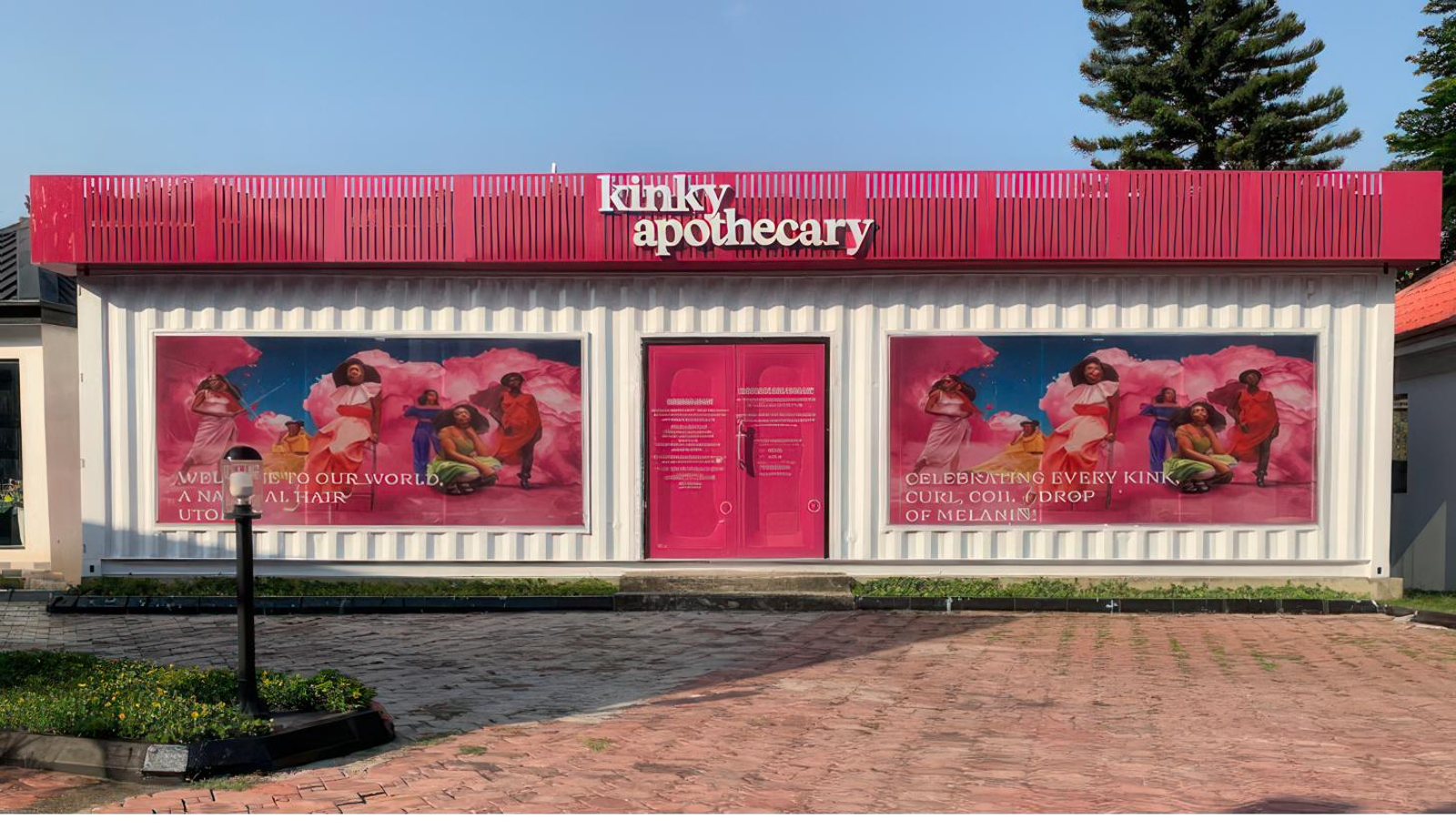
The Kinky Apothecary storefront in Lagos
The real thing. Kinky Apothecary’s Lagos storefront — a decade-old business, not an idea on a slide.
02 The Approach

A diamond to keep us honest.

Five of us, three weeks, one founder with funders to impress. An open brief like that will happily eat a sprint if you let it, so we ran the Double Diamond — the framework that forces you to widen before you narrow, twice. Go broad to find the real problem, squeeze it to a sharp one; go broad again on solutions, squeeze to the one worth building.

Discover Define Develop Deliver

Here’s the map of what’s coming — four phases, and what we did in each. You’ll watch it unfold over the rest of this case study; for now, just hold the shape.

01

Discover

  • Interview users
  • Synthesise data
  • Competitive analysis
02

Define

  • Problem statements
  • Jobs to be done
  • Persona
03

Develop

  • Sketch / design studio
  • Wireframes
  • Prototype & testing
04

Deliver

  • MVP
  • Presentation
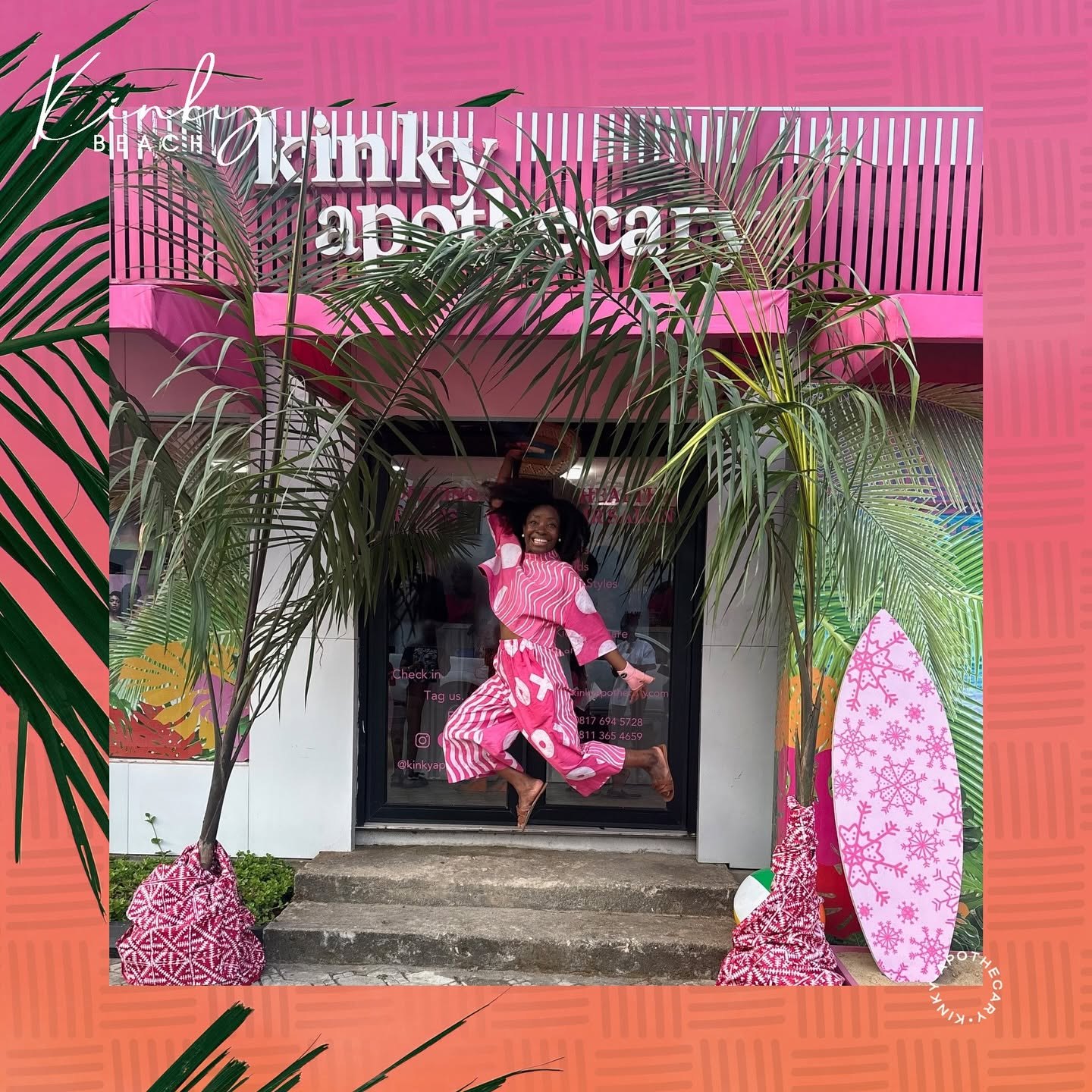
Nibi Lawson mid-jump outside the Kinky Apothecary shop
03 Meeting Nibi

Turns out the client had done her homework.

Before we sketched a thing, we got Nibi on a call — less a kick-off, more a download. We expected an idea-stage founder. We met someone who’d been living the problem for ten years and had the receipts to prove it.

Then she opened her Miro boards, and the scale of it landed. This wasn’t a sketch of a quiz. It was the whole brain of the machine, mapped out: variations of questions, the possible answers to each, and the branching logic that routed every combination to a tailored product recommendation. Years of knowing this hair, turned into a decision tree. Alongside it: the brand, the products, and the customer-discovery work to back the logic up.

And the kicker — twenty-plus recorded user interviews she’d already run with women about their hair. The breadth was honestly breathtaking. The raw thinking wasn’t missing; it was waiting for us.

That changed our job. Not “invent the idea” — sharpen it, and make it real.

04 Discover · The research

So we put her interviews to work.

Nibi’s twenty-plus recordings were the gift — but a pile of audio isn’t insight. I transcribed them, we recruited a few more interviewees of our own, and then came the slow part: synthesising fifteen of them in real depth — no mean feat, and a deliberate one: rather than skim the lot, we chose to take a smaller set apart line by line and actually understand it.

15

interviews taken apart line by line — not skimmed, dissected. The fifteen who would become Danielle.

“Synthesising” sounds tidy. In practice it was every observation onto its own sticky, then sorting and re-sorting until the noise organised itself into nineteen themes — the lenses we’d come to understand these women through:

Ethnicity pride & backgroundCurrent knowledgeEducation & lack ofHair challengesHair challenges from changing circumstancesStyle, attitude & preferenceRelationship with their hairPerception of good hairComparison & self-esteemFrustrationTrial & errorRegimen & productProduct spendHairdressing spendShopping habitsExpert opinion & trustLoyaltySalon / hair specialistGoals & aspirations

Underneath all nineteen, the same three words kept surfacing — in different accents, different words, the same ache: trust, overwhelm, control. Those clusters, and the jobs-to-be-done that fell out of them, are what we’d later distil into one woman: Danielle.

I’m buying it based on what it says on the bottle. So, trial and error.

Tosin · interview
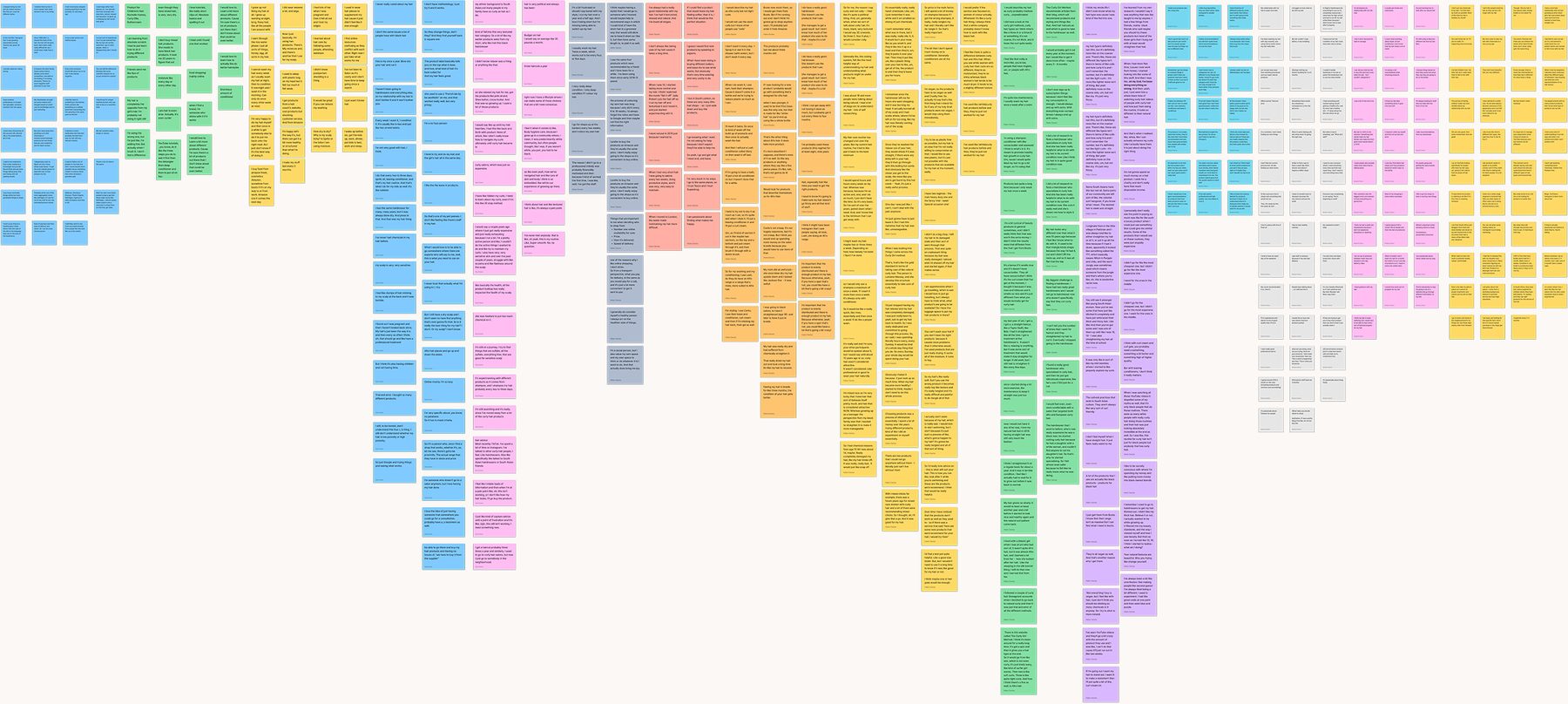
Sorted affinity map — hundreds of interview observations clustered into themes
Affinity mapping. Every interview observation onto a sticky, then sorted and re-sorted into themes — hundreds of notes, clustered until the patterns that became Danielle rose to the top.

“I’d like a process that is simple; something that would tell me: Hey, this week do this, this week do that.

“When I find a brand, I’m someone who sticks with it if it works.”

“I actually don’t swim because of my hair, which is really sad.”

Three that rose to the top. The stickies we kept coming back to — the wish for a simple routine, the loyalty once something works, and the quiet cost of not trusting your hair. Each became a thread in Danielle.
05 Define · The journey

We mapped her journey — and found a loop.

Plotting the emotional journey we’d heard across the interviews, one thing jumped out: she wasn’t moving forward, she was circling. Trial and error → seek advice → try again → back to trial and error. Stuck near the bottom, never climbing.

And there was a trapdoor. When a product changed or went out of stock, it sent her all the way back to discovery — every time. That single note is why a subscription later became non-negotiable.

Why doesn’t my hairlook like hers? Search for aregimen → trial & error Seek advice ·understand consultation Purchase ·plan a regimen Achieve &maintain She doesn’t climb — she circles. When a product changes or sells out, she’s thrown all the way back to discovery.
The journey map. Danielle’s emotional path — dipping into the trial-and-error loop, never climbing out, until a regimen finally sticks.
06 Define · The stakes

The existing path had a terrifying dead end.

When we mapped the current user flow, one terminal state said everything you need to know about the stakes. If nothing worked — if the loop never broke — the journey didn’t just stall. It ended in “fail / cut off hair.”

That’s what we were designing against. Not a conversion metric. A woman cutting her hair off because nothing helped.

Start Search for a hair-care regimen Will this improve it? Trial the product Goal achieved? Buy & plan the regimen Achieve goals Seek expert advice Online or IRL? Take an online quiz → see results Salon / specialist → consultation Continue? New info — keep searching Still looking? Fail / cut off hair yes yes no no yes no yes no
The current user flow. Every path she could take — and the one terminal state that says it all: fail / cut off hair.
07 Define · The insight

The real problem wasn’t products. It was self-trust.

Underneath every “there’s too much choice” was something quieter and far more telling. These women had stopped trusting their own judgement about their own hair.

Not really trusting yourself to know your hair well enough to know what to do.

Kit · interview
That reframed everything. We weren’t building a product finder. We were building a confidence rebuilder — and every feature that survived had to earn its place by rebuilding that trust.

08 Define · The persona

Fifteen women became one: Danielle.

A persona is a decision-making tool, not a stock photo. Danielle is the woman behind the journey and the dead-end flow you just saw — one character carrying every pattern the interviews surfaced. From here on, every feature had to earn its place by working for her.

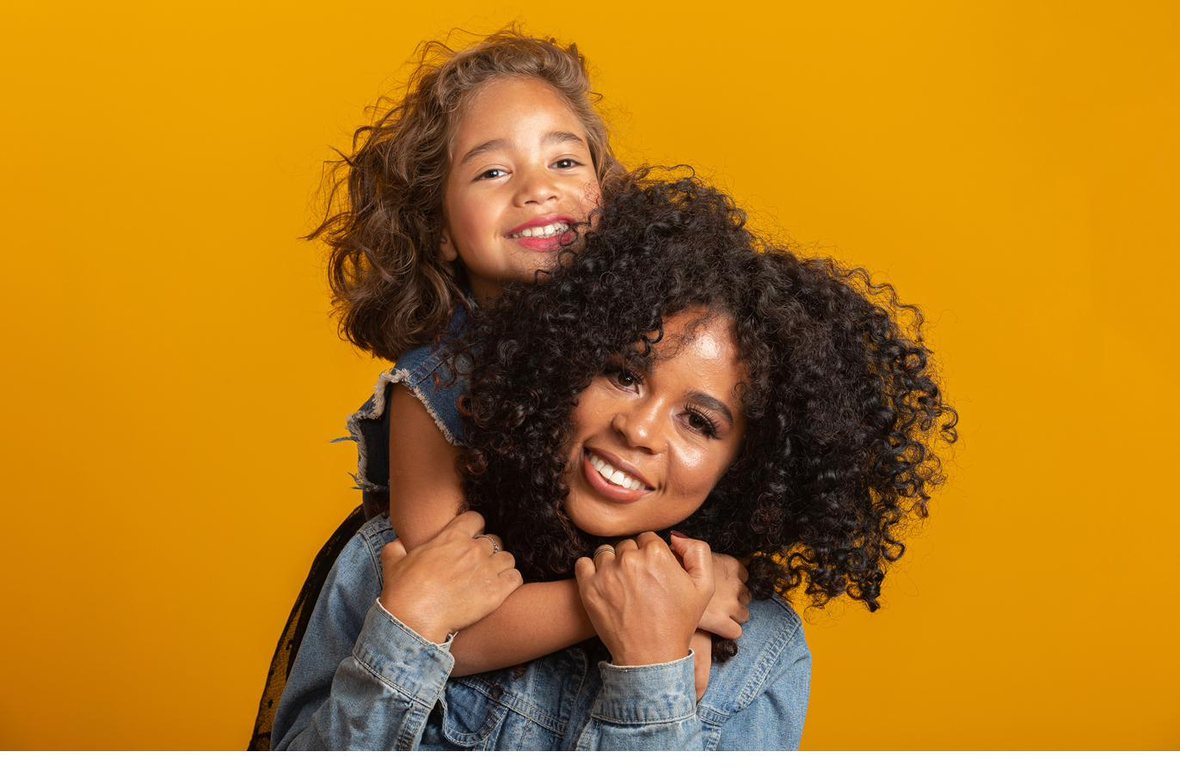
Danielle and her daughter
Danielle, 38
London · Full-time · Married · Two mixed-race daughters
“I really want expert advice from someone who understands my hair condition and who I trust to help me build a simple care regimen — so I can fall in love with my hair again!”
Story

In her late teens she spent years chemically straightening her hair under pressure from family and peers to fit Western standards.

Leaving uni, she saw the damage — and spent a fortune, and years, undoing it. Now in her late 30s, after children, her hair has changed again. She won’t repeat that trial-and-error, and wants her daughters to have a better relationship with their hair early on.

Needs & goals
  • Products for her hair type that align with her values
  • A routine that fits her lifestyle
  • Authentic advice, results from people with similar hair
  • A system so she never runs out
  • To understand what she’s been doing wrong
Behaviours
  • Prefers vegan / natural products
  • Supports black-owned businesses
  • Likes to feel in control
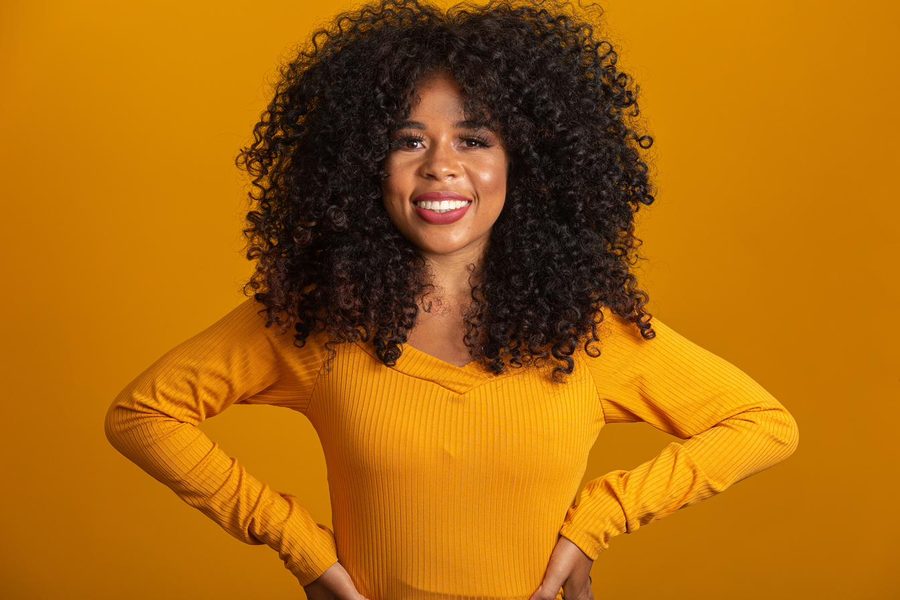
Danielle, arms confident on her hips

Her frustrations.

  1. Overwhelmed when choosing products.
  2. Can’t figure out the cause of her hair problems.
  3. Fed up with product recommendations made for marketing, not for her.
  4. Her routine falls apart when products run out or get discontinued.
  5. Feels her hair is limiting her lifestyle choices.
  6. Existing routines stop working when her circumstances change.
The problem to solve

Danielle needs a better way to get trustworthy, expert advice — to understand her hair and easily build a simple routine that suits her hair type and her values. So she can elevate her hair’s condition, express her style, feel confident through life’s changes, and fall back in love with her hair.

Six frustrations, one through-line. Every one of them is really about losing control — the exact feeling the product set out to give back.
09 Define · How might we

Two questions to design for.

09 · How might we

Everything now points one way.

01 If we can match Danielle with products she’s never heard of — but that are right for her hair…
02 …and keep her feeling in control of her routine, not at its mercy…
…then we’re no longer selling product. We’re giving her back the thing she came for — to fall in love with her hair again.
Danielle, hands in her hair, delighted
10 Discover · Comparative analysis

First, I studied everyone already doing this.

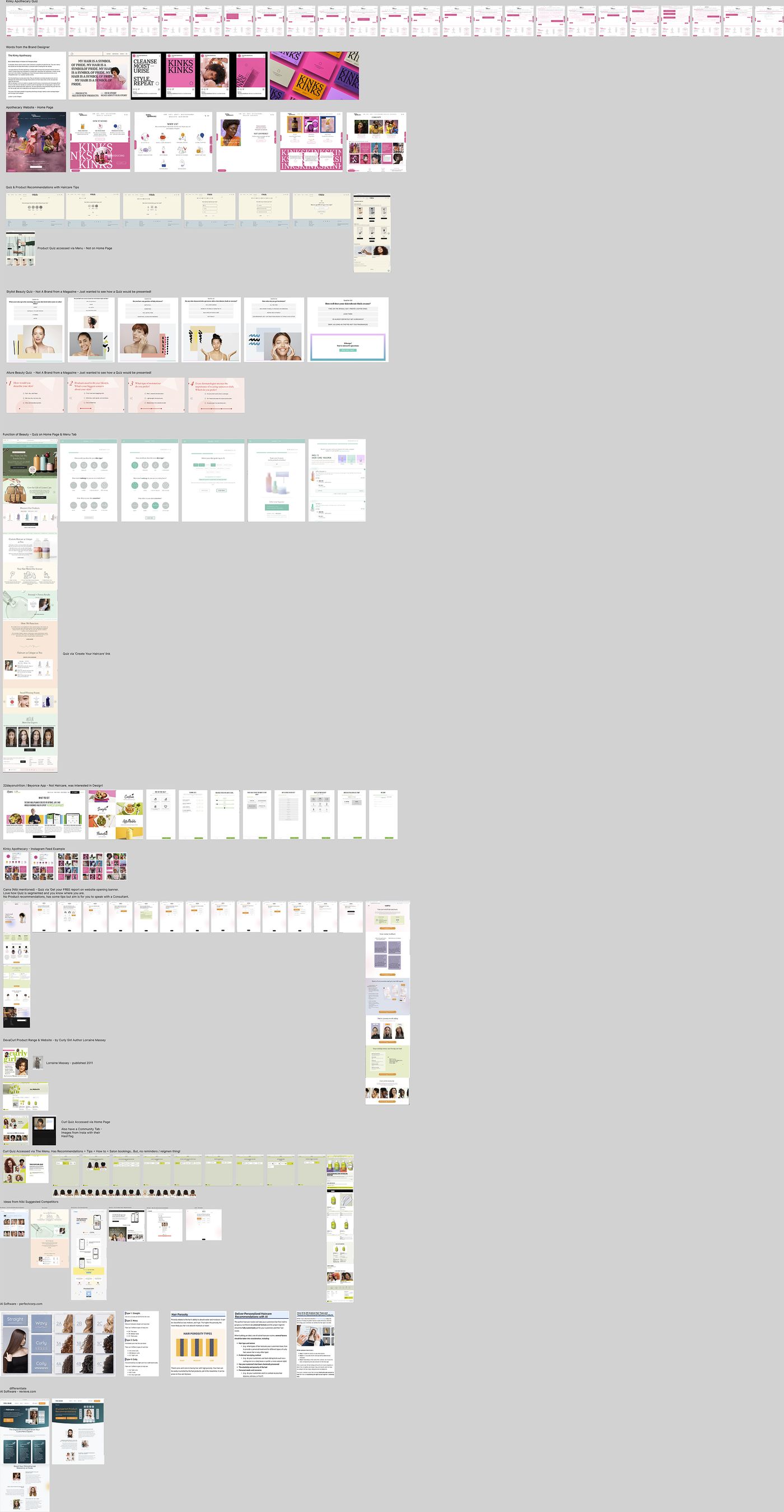
Plenty of brands run a quiz that recommends products — so before designing ours, I cast the net wide. Not just haircare rivals, but skincare too, to see how the mechanic worked across categories. I mapped how each one structured their flow, where they genuinely helped the user, and where the experience fell short. The goal wasn’t to copy the mechanic — it was to understand it properly, then find the gap worth owning.

Competitive analysis board
Comparative analysis. Competitor quiz flows and current-state teardown — what to keep, what to beat.
11 The Design Studio

The afternoon we decided what to build.

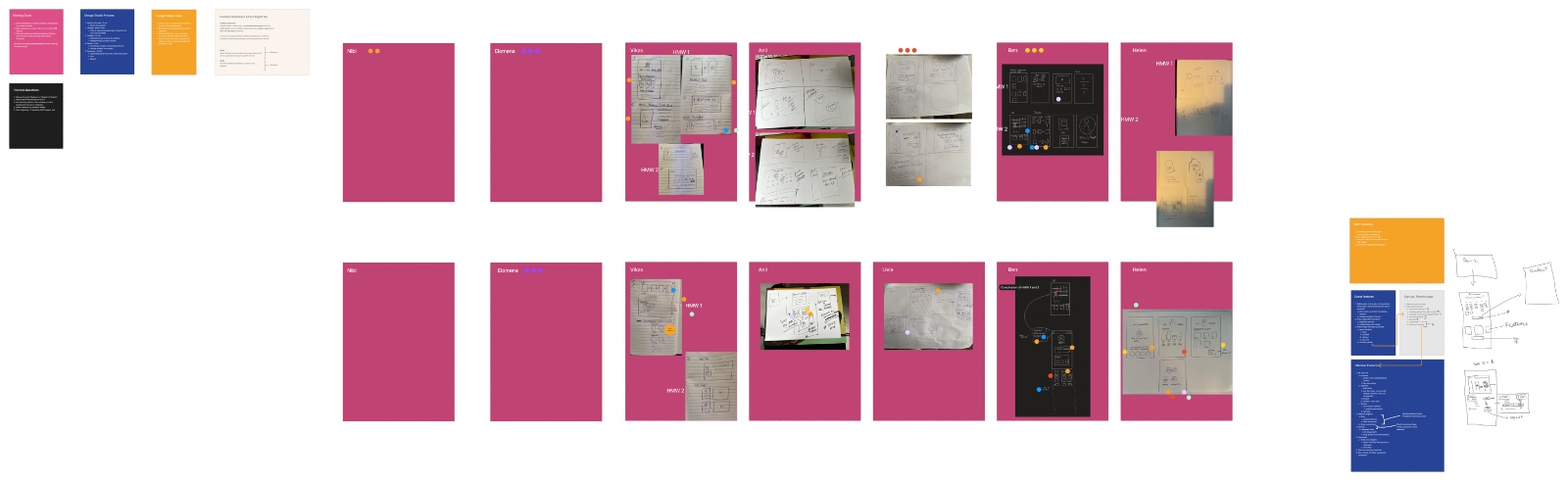
We now knew who we were building for and what hurt — but not yet what to build. So, with the research synthesised, we ran a design studio: six of us, Nibi included, sketching solutions independently and dot-voting on what mattered. By the end of the afternoon the fog had turned into two clear project goals — the brief we’d hold everything else against.

Goal 01

Create a web-based app within the website that makes the user feel they have a hair guru in their pocket — one they can consult at all times.

Goal 02

Create a product users look forward to engaging with and come back to regularly.

Read together, those two lines set the bar: not a shop with a quiz bolted on, but guidance over transaction — something useful enough to open on a Tuesday and trust enough to return to. Every feature that survived from here had to earn its place against them.

Design studio board
Design studio. Two rounds, six contributors, dot-voted to a shortlist.
12 Develop · Low-fi first

Before it was beautiful, it was grey boxes.

Out of the design studio came a structure, not a skin. The team split into two pairs — Vikram and Ben, Helen and Livia — and wireframed the whole flow in low fidelity: welcome, quiz, recommendations, basket, dashboard, calendar, hair journey, community. No colour, no photography, no brand. Just the bones of the thing, argued over screen by screen until the journey held together.

Then, before the Christmas break, they handed that low-fi prototype to me to take to high fidelity. Everything you see after this point started its life as one of these grey boxes.

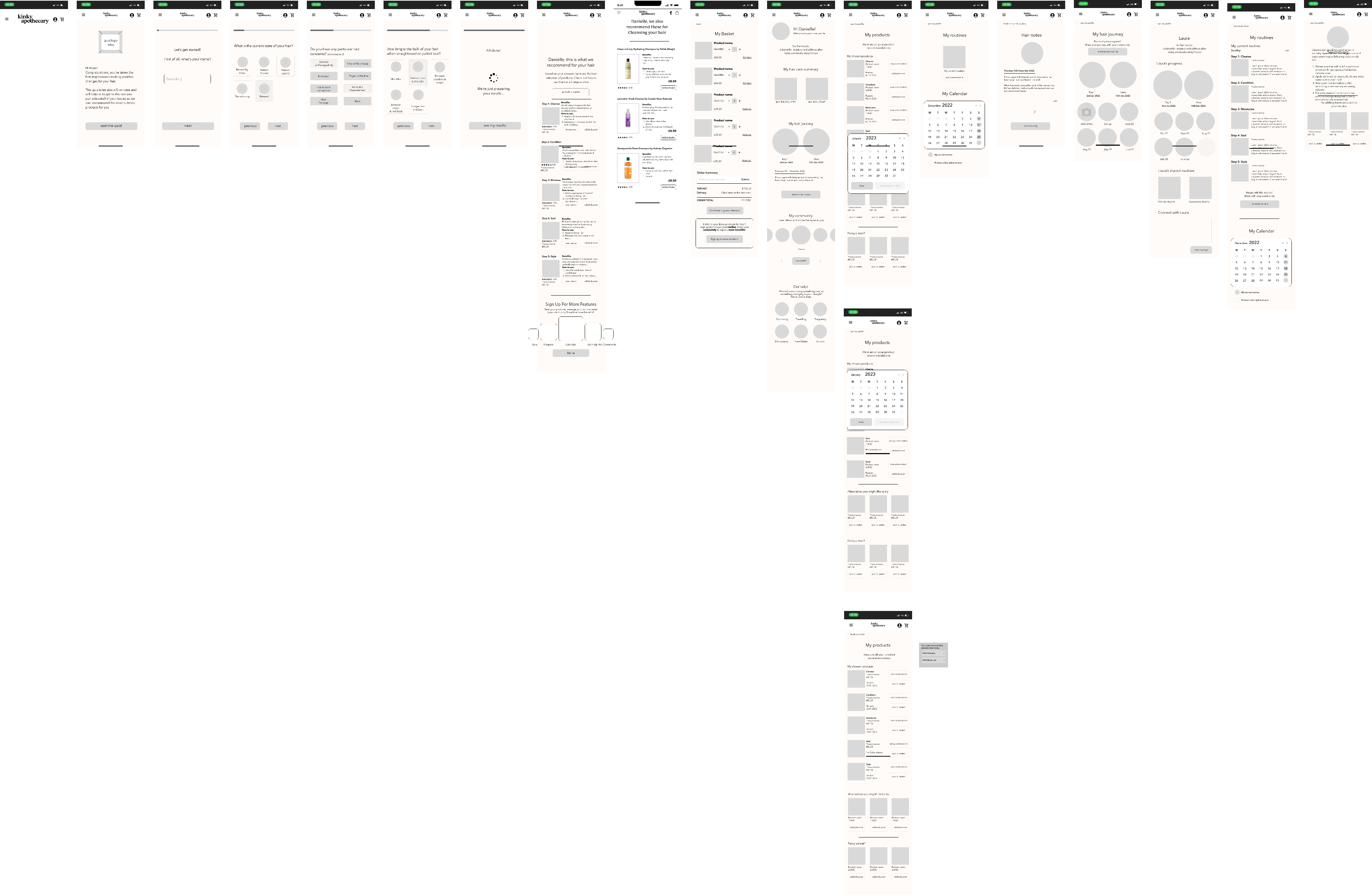
Low-fidelity wireframe flow
The team’s low-fi flow. Welcome → quiz → recommendations → basket → dashboard → journey → community, all in greyscale.
13 Develop · Raise the bar

I sprinkled some Christmas magic onto the prototype.

We broke for Christmas. It should have been rest. No one expected the course to be as intensive as the word bootcamp promised — it was everything and worse, and we'd burned the candle at both ends since the very first assignment. This was the last one, the one we'd been building toward: a real client.

So I took the quiet — no classes, no distractions — and went to town on the one prototype I had sole ownership of. This had to look a million dollars.

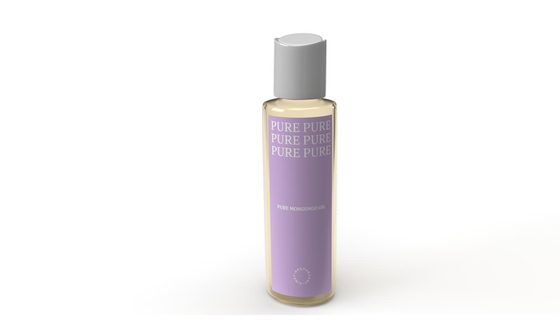
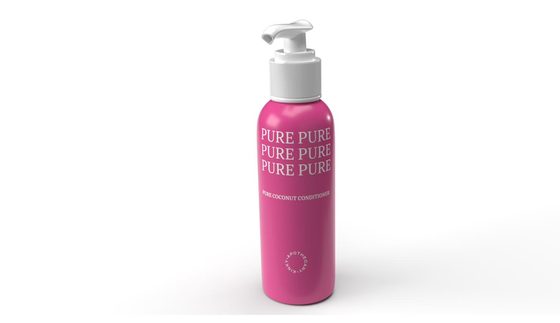
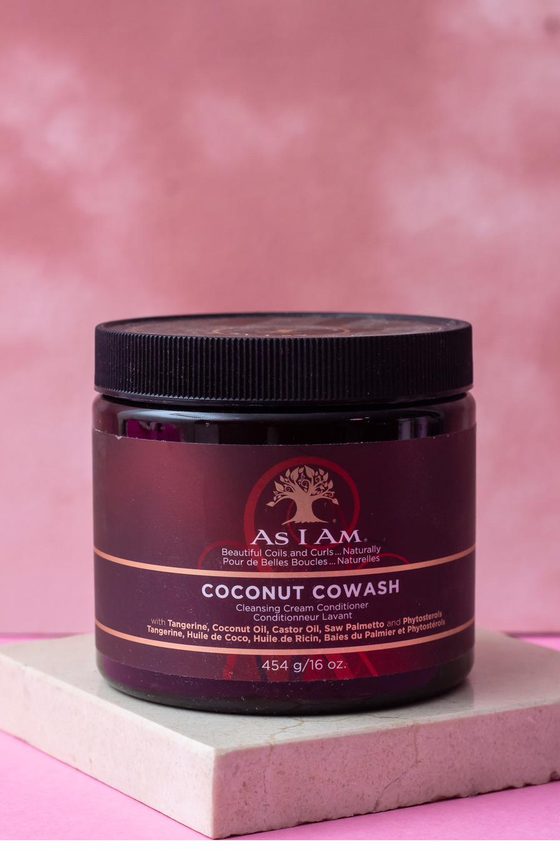
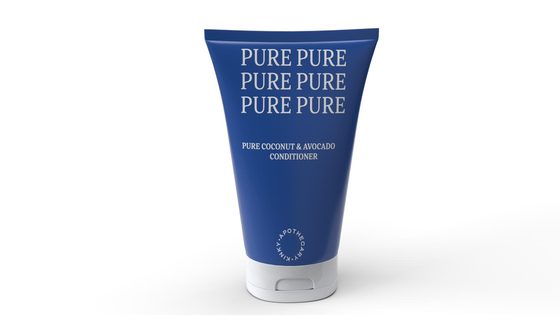
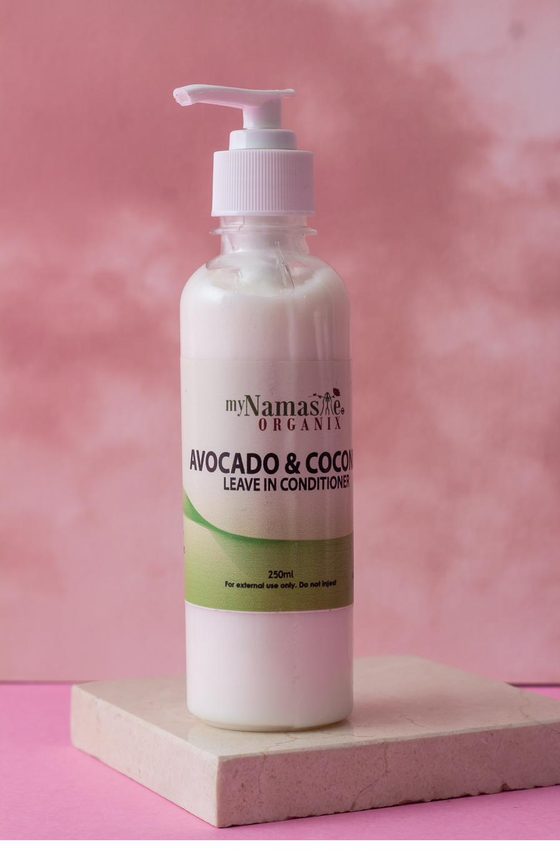
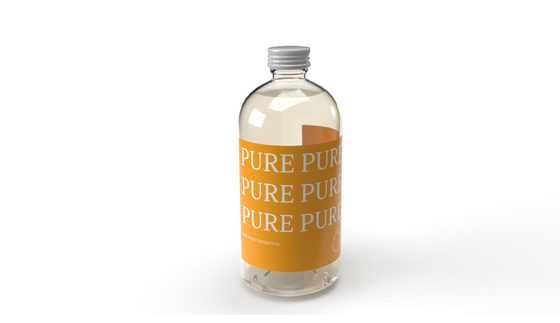
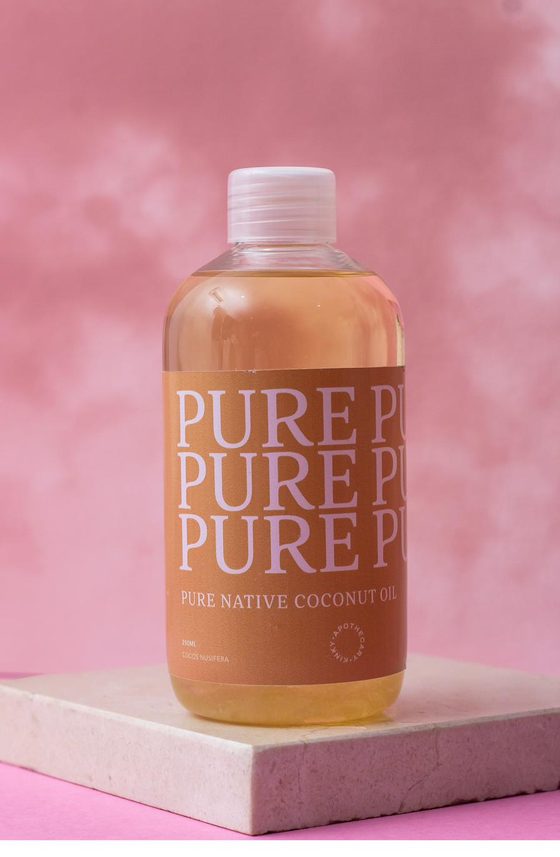
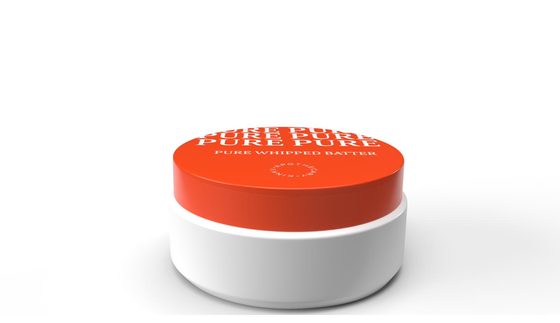
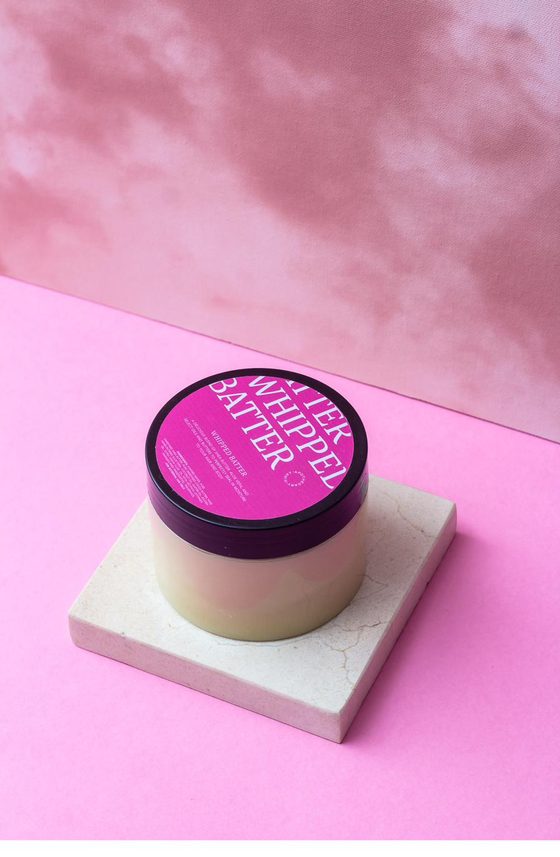
I'd been handed stock photography, but it was useless in a clean UI: pink-smoke backdrops, reflections, inconsistent angles. I wanted clean white shop stock for the MVP — so I rebuilt the entire PURE range from scratch as 3D renders in Adobe Dimension, each one colour-mapped to its place in the regimen. Then I used them to produce an in-app looping banner.

None of this was on the brief. It was the extra mile: re-rendering stock I could have left alone, building a banner that followed the brand guidelines to the letter, looping video for the community join. The little touches — attention to detail. It had to feel real.

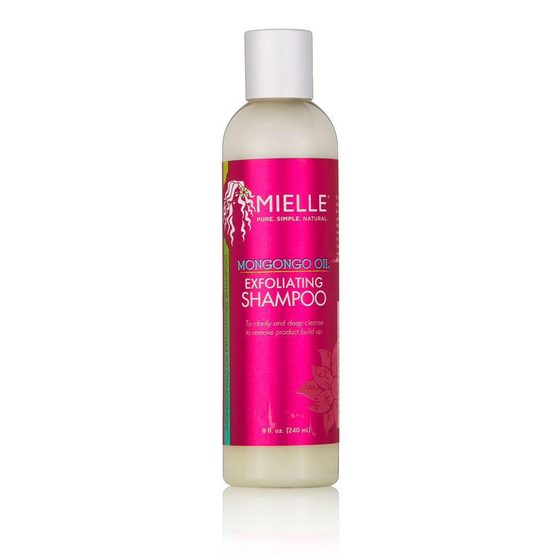
Five renders, side by side with the market equivalents they’d sit beside.

Their source images came in every size and shape; mine were standard. So each one sits in an identical frame, scaled to fit in full — nothing cropped, nothing clashing.

01 Mongongo Oil Cleanse
Pure Mongongo Oil
Anil render
Pure Mongongo Oil
Kinky Apothecary
Mongongo Oil Exfoliating Shampoo
Market equivalent
Mongongo Oil Exfoliating Shampoo
Mielle Organics
02 Coconut Conditioner Condition
Pure Coconut Conditioner
Anil render
Pure Coconut Conditioner
Kinky Apothecary
Coconut Cowash Cleansing Cream
Market equivalent
Coconut Cowash Cleansing Cream
As I Am
03 Coconut & Avocado Moisturise
Pure Coconut & Avocado Conditioner
Anil render
Pure Coconut & Avocado Conditioner
Kinky Apothecary
Avocado & Coconut Leave-In
Market equivalent
Avocado & Coconut Leave-In
Namaste Organix
04 Native Coconut Oil Seal
Pure Native Coconut Oil
Anil render
Pure Native Coconut Oil
Kinky Apothecary
Pomegranate & Honey Twisting Soufflé
Market equivalent
Pomegranate & Honey Twisting Soufflé
Mielle Organics
05 Whipped Butter Style
Pure Whipped Butter
Anil render
Pure Whipped Butter
Kinky Apothecary
10-in-1 Cream-in-Mousse
Market equivalent
10-in-1 Cream-in-Mousse
L'Oréal Professionnel
In-app banner. One of the looping ads built from the rebuilt PURE renders, following brand guidelines.
Improving the quiz. The front door to the whole concierge — and where the experience had to feel personal from the first tap. This never made the app — a bit of fun, to spark my creativity.
Join Us, in landscape. The community sign-up flow, looping in a tablet view.
14 Deliver · Key concepts

Then I took the grey boxes and made them real.

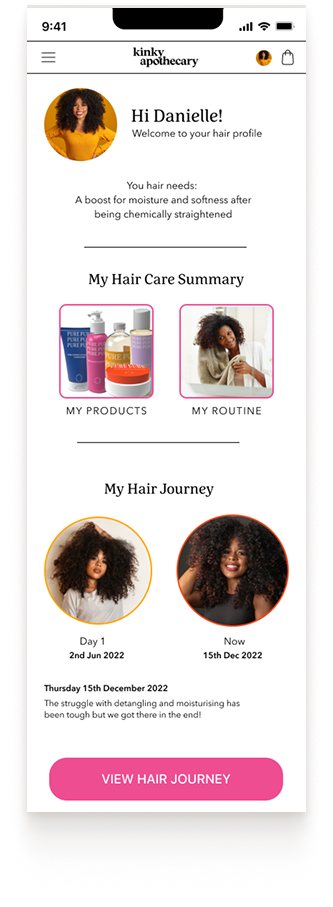
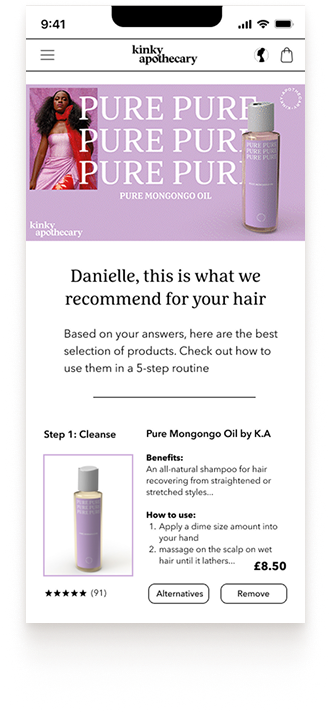
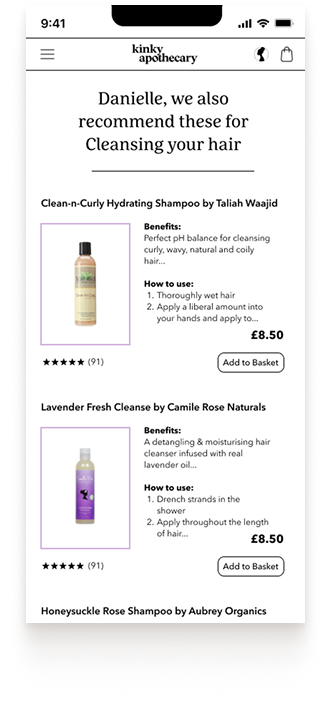
This is where I came in. Over the Christmas break I rebuilt the structure the team had set into a fully-branded, high-fidelity prototype — and fixed the flow and visual problems on the way up. Two screens carried the most weight: the recommendations page, where the quiz pays off in a five-step routine, and the dashboard, the home a returning user opens on a Tuesday.

The research kept saying the same thing: people need to see people like them. So the brand work leaned hard on real photography — not 3A-to-4C hair charts, but actual women — and on my own product renders, so the shelf looked like a real shop.

Recommendations
RecommendationsA 5-step routine, each product a render.
Dashboard
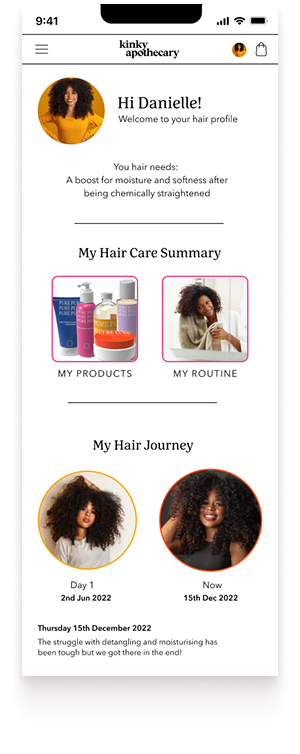
DashboardHair-care summary, journey and community in one place.
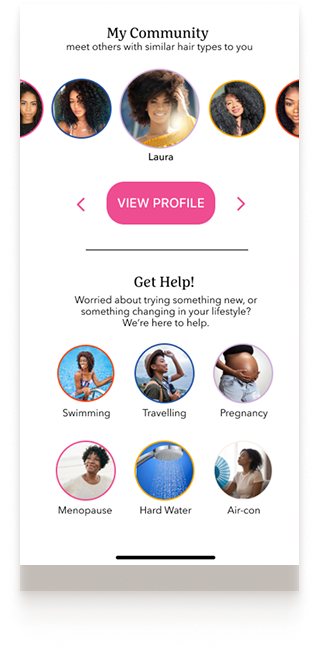
Community & Help
Community & HelpReal faces, real situations — swimming, travel, hard water.
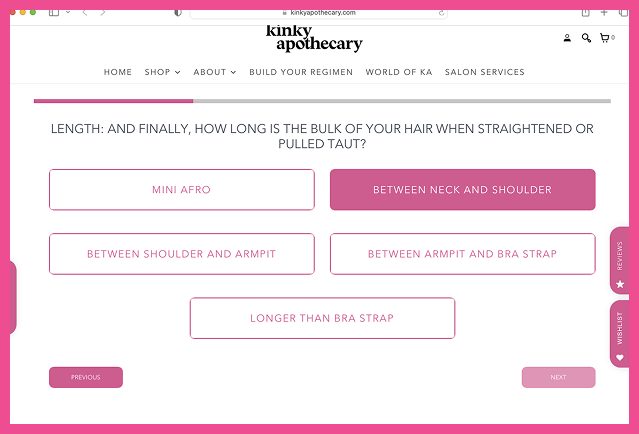
Original quiz, word options only
Before
Length picked from words alone — “mini afro”, “between neck & shoulder”.
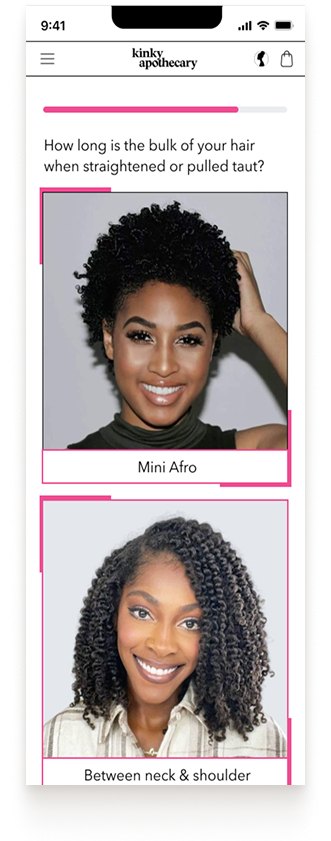
Redesigned quiz with real hair photography
After
Every state shown on real hair, so you can actually see yours.
The quiz, upgraded. Interviews and competitor analysis said the same thing: people need visual aids, not labels.
15 Deliver · The user flow

One loop: quiz → results → routine → back again.

Every screen had to earn its place on a single journey. Danielle takes the quiz, meets her recommendations, buys or subscribes, and lands on a profile that keeps pulling her back — her routine saved, her hair journey building, the community a tap away. Guidance over transaction, exactly as the design studio set out.

Take the quiz
Step 01
Take the quiz
Get results
Step 02
Get results
Buy or subscribe
Step 03
Buy or subscribe
Buy as a guest · or sign up to save
View profile
Step 04
View profile
One loop, four stages. Quiz → results → a fork to buy or subscribe → the profile that brings Danielle back.
16 Deliver · The features

Four features. Each one earned by a sentence.

Once the quiz was working, the design studio gave us a longer list of things KA could become. We cut it to four — and the test for each was simple: did it trace back to something a real person actually said? None of these shipped in the MVP. They were the roadmap — the version of KA the quiz would earn its way toward, built only once there was traction to justify them.

01SubscriptionInterview insight
“When I find something that works, I’m someone who just sticks to it. I panic if I run out of it.”

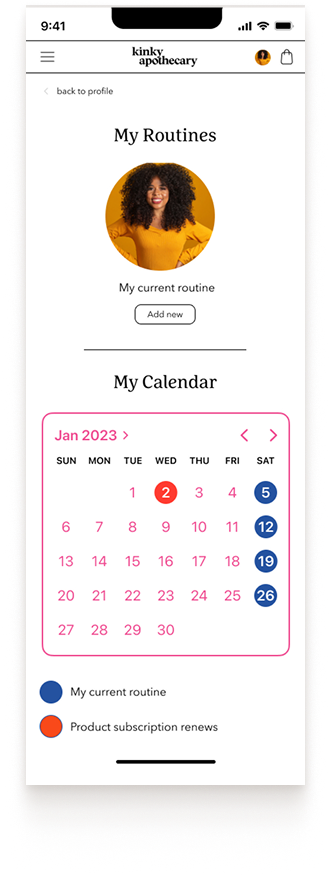
That’s not an upsell — it’s an emotional need. The subscription lets Danielle save her routine to a calendar and have products arrive before she runs dry. Never caught short again.

My Routines & subscription calendar
02Hair JourneyInterview insight
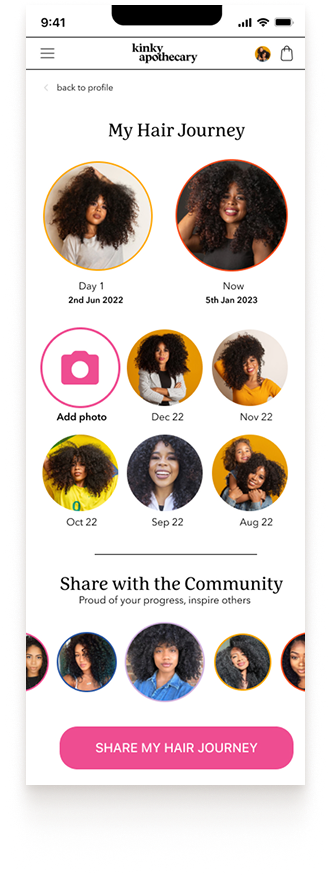
“I’m developing my relationship with my hair now.”

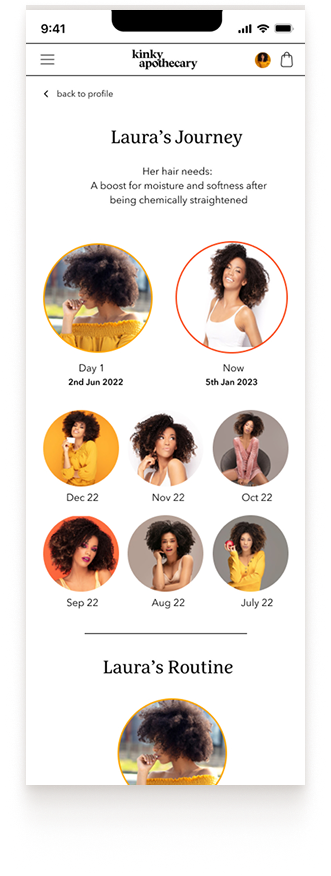
The Hair Journey lets her log progress photos month by month, see how far she’s come, and — if she wants — share it. Confidence, made visible.

My Hair Journey
03CommunityInterview insight
“There’s so much marketing noise. I trust products proven to work on people with hair like mine.”

So we let her find them. Community surfaces people with similar hair, their routines and what actually worked — peer proof over marketing claims.

Community profile
04HelpInterview insight
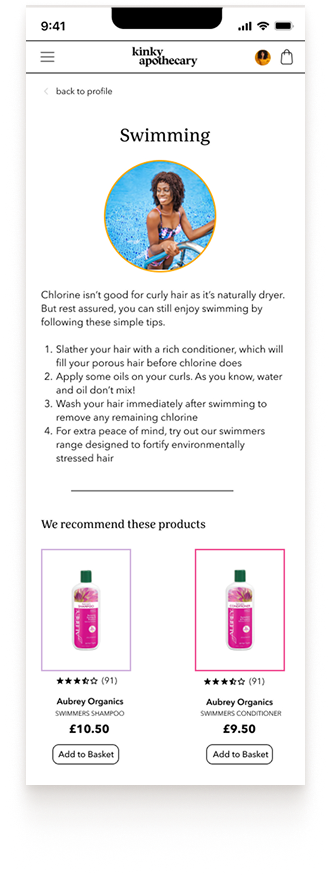
“I don’t swim because of my hair, which is really sad. I’d love to start.”

When life changes — swimming, pregnancy, travel, hard water — the routine has to flex. Help gives targeted advice and the products to match, so her hair stops being the reason she says no.

Help — targeted advice
17 Deliver · Usability testing

Then we tested it — and it humbled us.

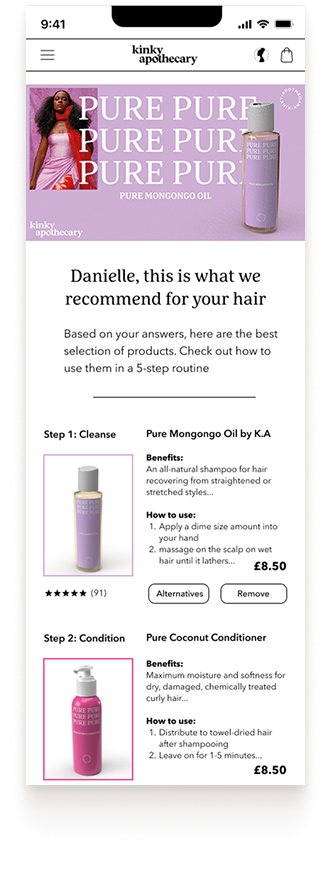
Before I built the hi-fi, the team put the low-fi greyscale prototype in front of users — and learned the usual hard things. Two problems stood out, and both got fixed on the way up to high fidelity.

Finding 01
Nobody saw the arrows.

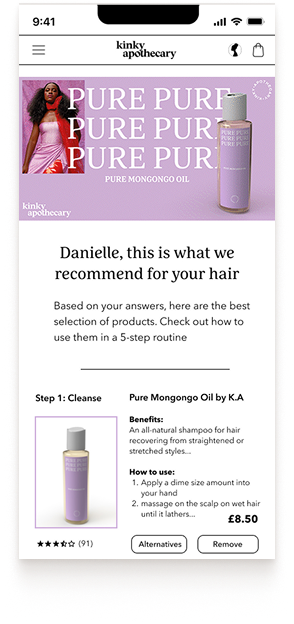
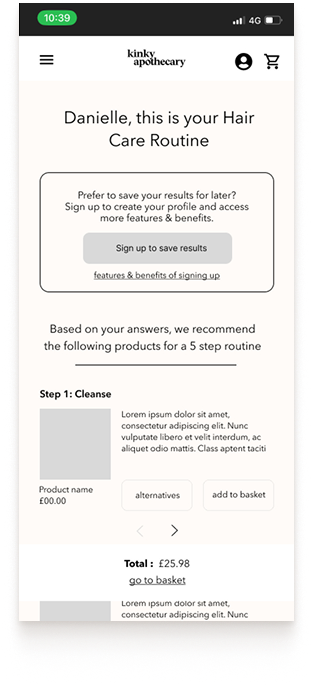
On the greyscale build, users could swap a recommended product for an alternative — but the toggle was a pair of small arrows, and in testing almost no one noticed them.

So in the hi-fi I redesigned the layout and added a clear Alternatives button that opens a list of swaps for that step.

Tested · low-fi
Tested · low-fi
Alternatives button
Alternatives button
Alternatives list
Alternatives list
Finding 02
Buying was too much work.

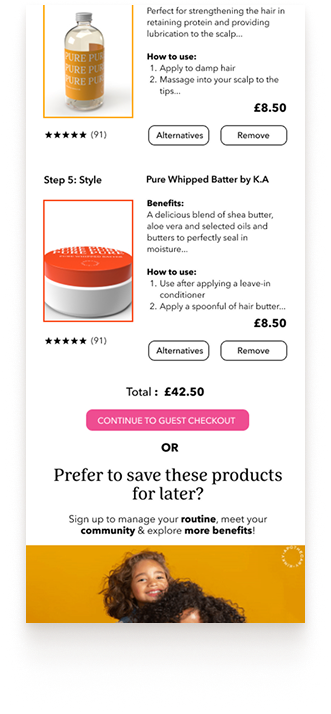
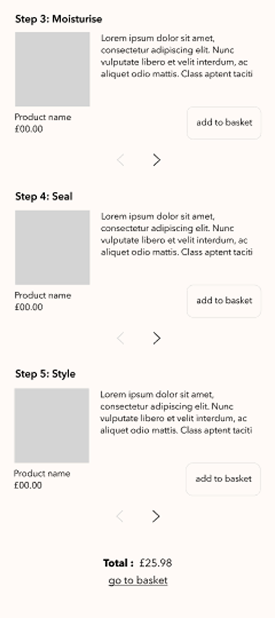
The first idea made users add each recommended product to the basket one at a time. In testing that friction added up fast across a five-step routine.

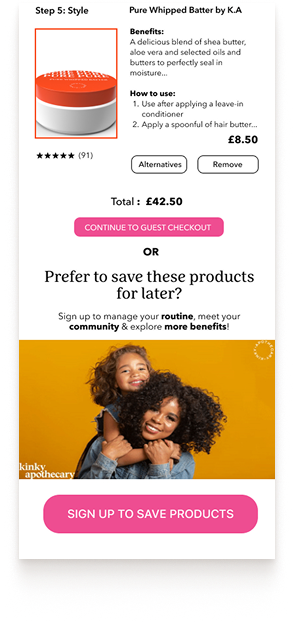
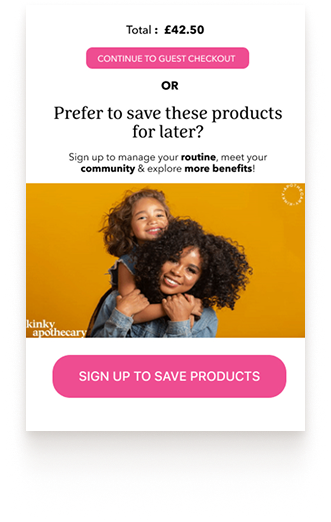
In the hi-fi every recommendation is preselected by default, so checkout is one click — buy as a guest, or sign up to save the routine, with the sign-up given real emphasis.

Tested · low-fi
Tested · low-fi
One-click checkout
One-click checkout
Sign up to save
Sign up to save
18 Deliver · See it move

Don’t take my word for it — watch it work.

The payoff: the clickable prototype, driven end to end — one continuous loop that carries Danielle from first-time visitor to hooked regular. Here’s her path through it, screen by screen.

↻  Plays on loop
  1. 01

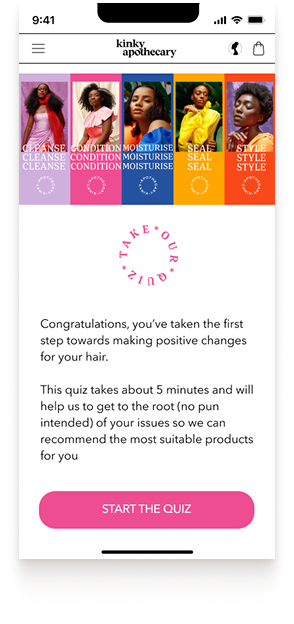
    It starts with a quiz

    Danielle enters the quiz, reads what it’s about, and gets going — no account, no pressure, just a few questions.
  2. 02

    Show, don’t tell

    Standard text questions sit alongside visual ones, so she compares real images and picks the hair type closest to her own — no jargon to decode.

  3. 03

    Her results, her call

    On finishing, she sees the products recommended for her and can check out as a guest or sign up to unlock the full dashboard.

  4. 04

    Products, on her terms

    From the top of the dashboard she manages her subscriptions and explores alternative products whenever her needs shift.

  5. 05

    A routine with a rhythm

    My Routine lays her schedule on a calendar, flagging subscription renewals and wash days so nothing creeps up on her.

  6. 06

    A journey worth keeping

    She tracks progress by adding photos and diary entries — and, if she wants, shares the journey with her hair community.

  7. 07

    She’s not doing it alone

    She finds others with hair like hers, views their routines, and messages them with any questions along the way.

  8. 08

    Help when life happens

    Hit a curveball — like going swimming? The Help button offers tailored advice and optional add-on products to protect the routine she’s built.

19 Reflection

Final reflections.

01

Minimum is the key word

With my Product Manager hat on, we delivered the MVP: the Quiz. And minimum is the operative word. We sketched a fuller vision — the features behind the community wall — but the real product-management call was knowing what not to build. The Quiz was enough to prove the idea; everything past it was roadmap, not MVP. We didn’t just meet the brief; we surpassed it — really connecting with the needs of the 15 individuals we so carefully dissected, and with Danielle, the persona they became.

02

I’d have built it native

One call I’d remake: at the Design Studio, a responsive web app looked like the cheaper MVP route, so that’s what we chose. But the features that mattered most to Danielle only fully come alive on a native iPhone app — calendar reminders that close the loop the journey map exposed, key features that don’t force a login (testing showed friction was what lost people), and native camera access for her hair journey snaps instead of a clunky snap-then-upload. I could continue, but you get the point!

As an MVP prototype, we surpassed our expectation — and truly enjoyed the many, many hours poured into this project.

I hope you enjoyed it too!

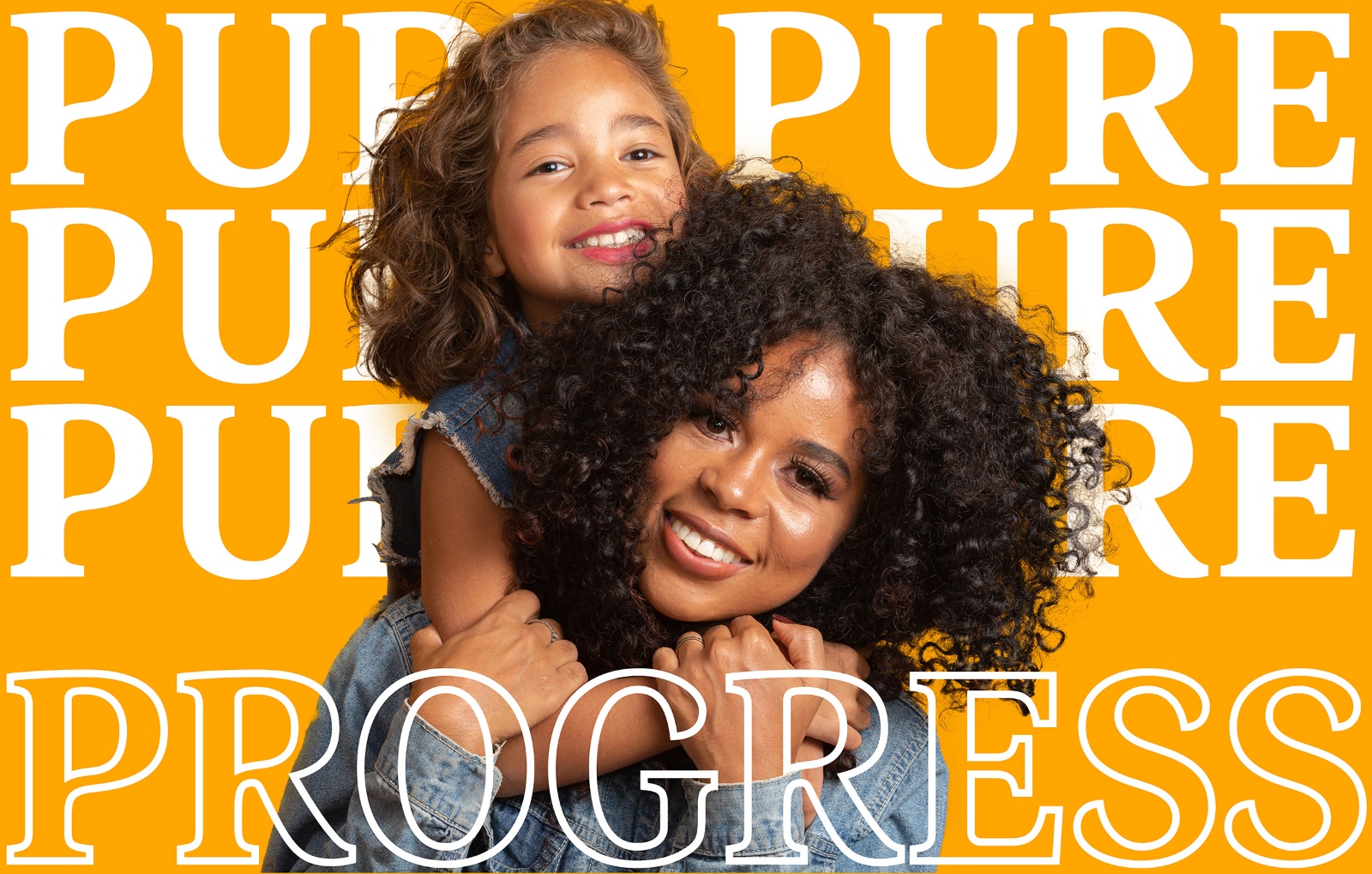
Danielle and her daughter, both with natural curls, embracing on a marigold background beneath the words PURE PROGRESS
Pure progress. Danielle — the persona we designed for — and her daughter, hair and all.
Kinky Apothecary
Anil Bhima · General Assembly UXDI